
Antal Pázmándi | Pop/Art/Blues
solo exhibition
It is a great joy and honor for me that today we can present a wide selection of works by Antal Pázmándi, drawn from a creative career spanning more than six decades — a body of work that has consistently represented one of the most distinctive and coherent sculptural voices within Hungarian ceramic art.
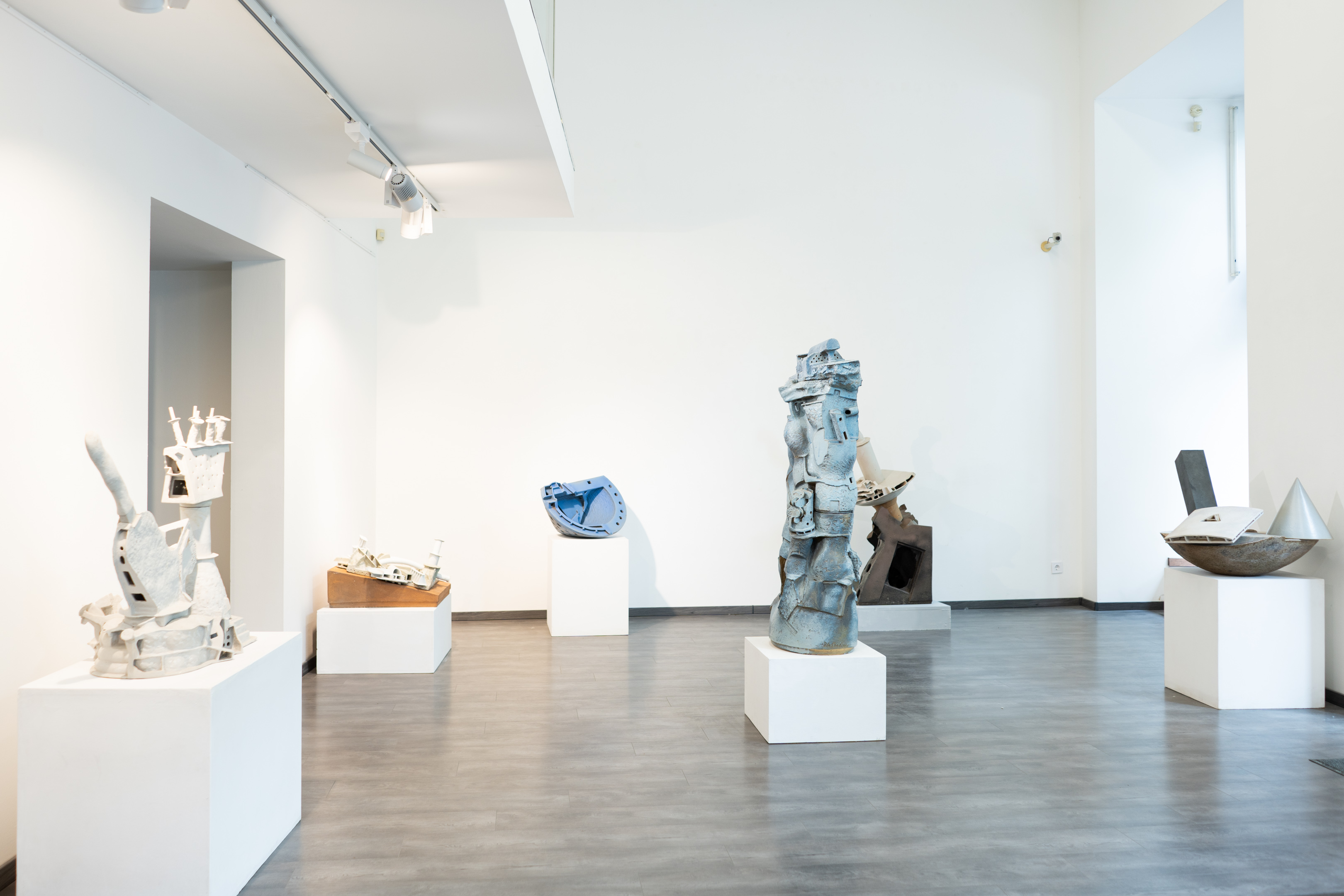
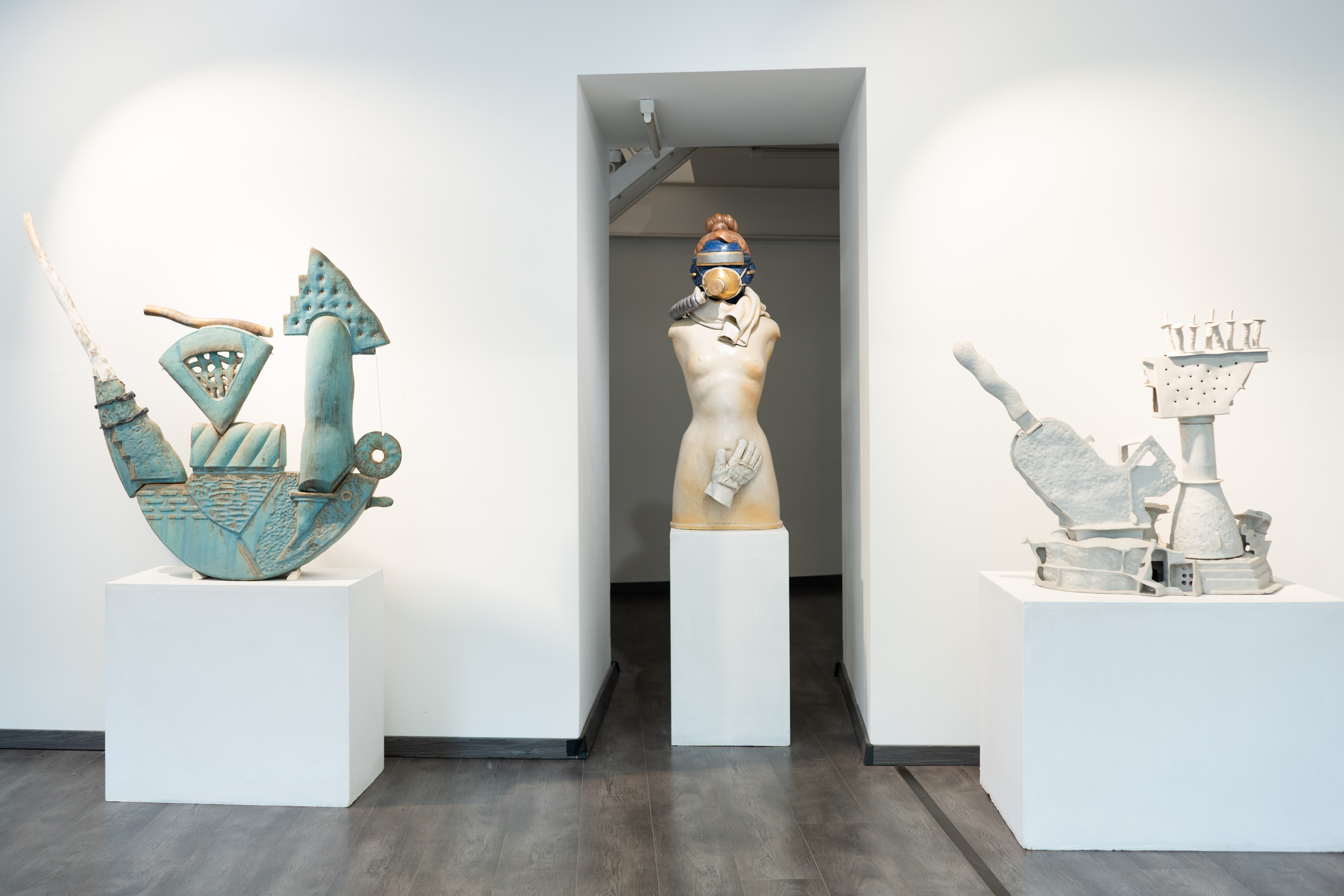
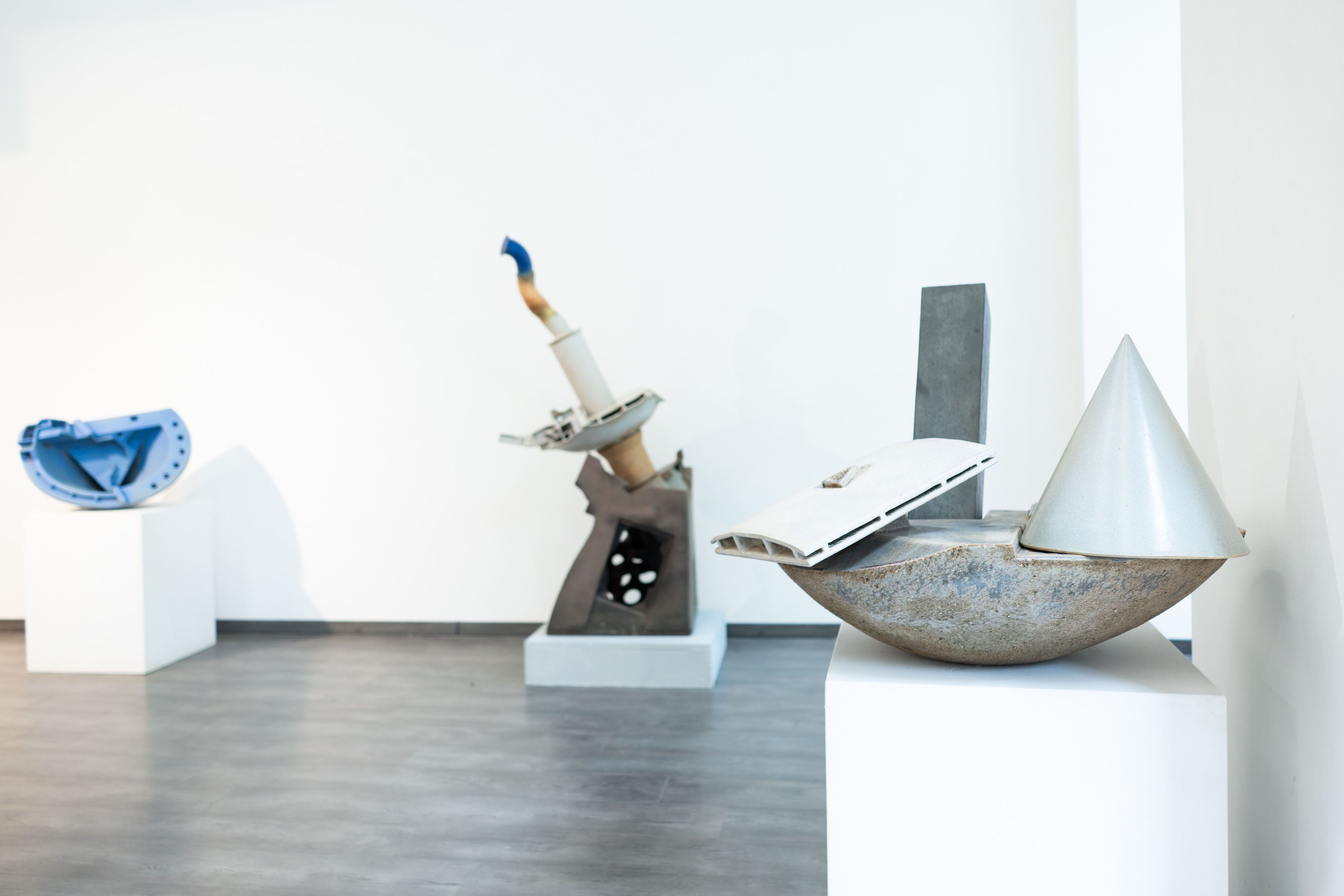
The foundation of Pázmándi’s art is rooted simultaneously in the tradition of wheel-throwing, structural construction, and a constructively driven approach to spatial formation. His unique and unmistakable style, often realized in monumental works, has made him singular in this field — whether we call it architectural ceramics, plastic art, or sculpture. In truth, however, these works cannot be placed into a single category; rather, they exist within and between these three main fields, in varying proportions and distances from one another, forming unique constellations. Every piece is different — the underlying formula only partially changes, while the level of quality remains consistently the same.
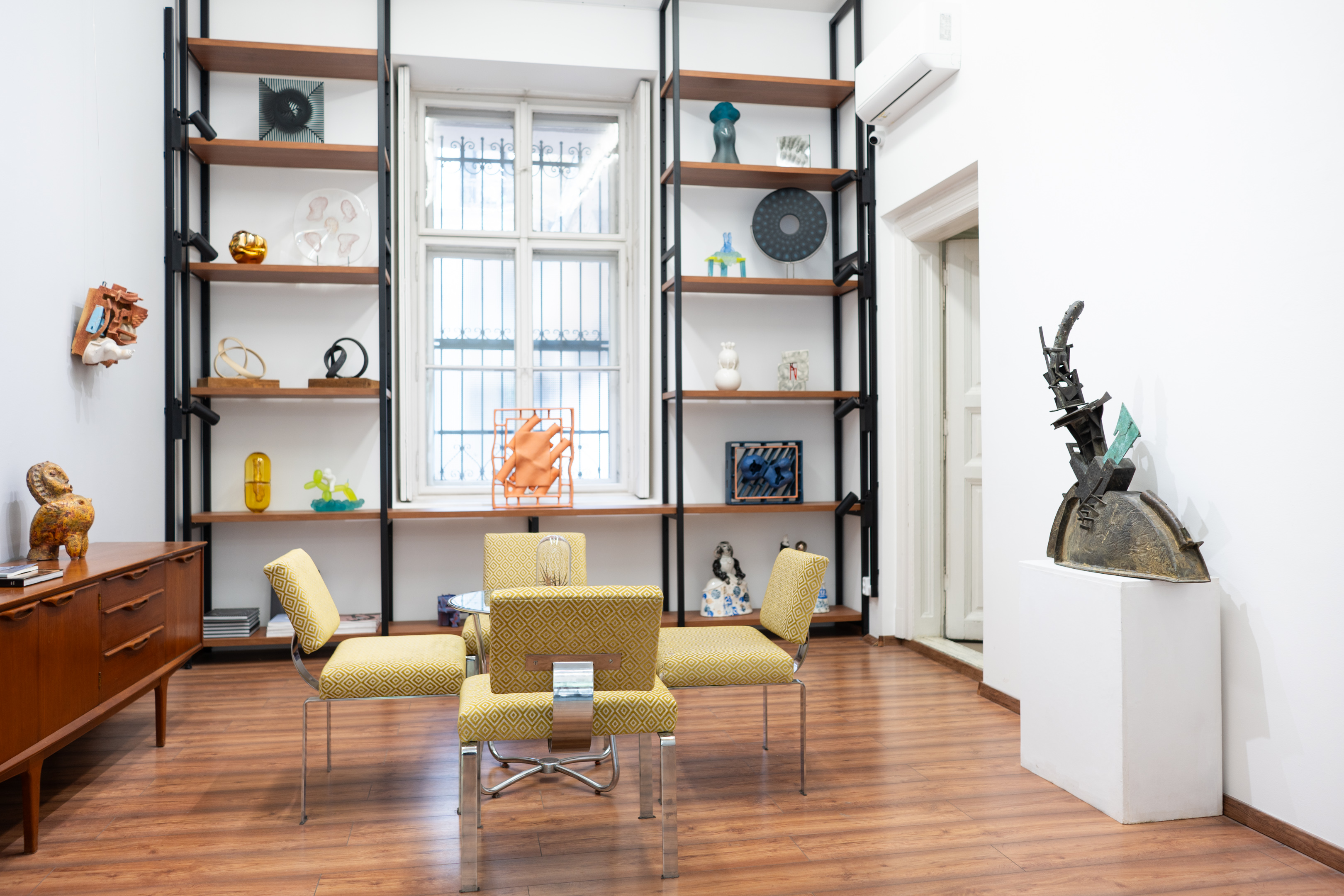
The exhibition Pop Art Blues is not the closing of a career, but rather a thematic selection from this rich artistic journey. It is a subjective journey through time, where iconic works have been placed in the gallery as stations and milestones along the path already taken.
The selection was not an easy task, as we are speaking about an artist with clear intentions who consciously constructs his works in both quantity and quality. He does not belong to the category of casual or overly playful creators, although humor is certainly present in his approach to material. His works are often compositional sketches, grid structures, evocations of architecture, clay études.
If we insist on a proper art historical reading, we can outline several distinguishable periods in terms of themes, which are nevertheless connected by fundamental principles of his style. These include strong sculptural articulation, multi-perspectivity, significant enlargement of scale, and a spatial thinking based on a system of negative and positive coordinates.
Chronological interpretation is not particularly fashionable today, yet in the case of such a large oeuvre it is unavoidable to also address the layers of development and interconnection.
In the beginning, he constructed large-scale works without the use of auxiliary molds: rounded character, organic references, and abstract sculptural forms marked the emergence of his artistic voice. Direct decoration is hardly present; earth tones, iron oxides, and raw chamotte define the basic character, occasionally softened by creamy tones and silky highlights. Rubbed, rough textures, soft and rounded transformations, and the contrast between lightness and massive material use create a constant tension.
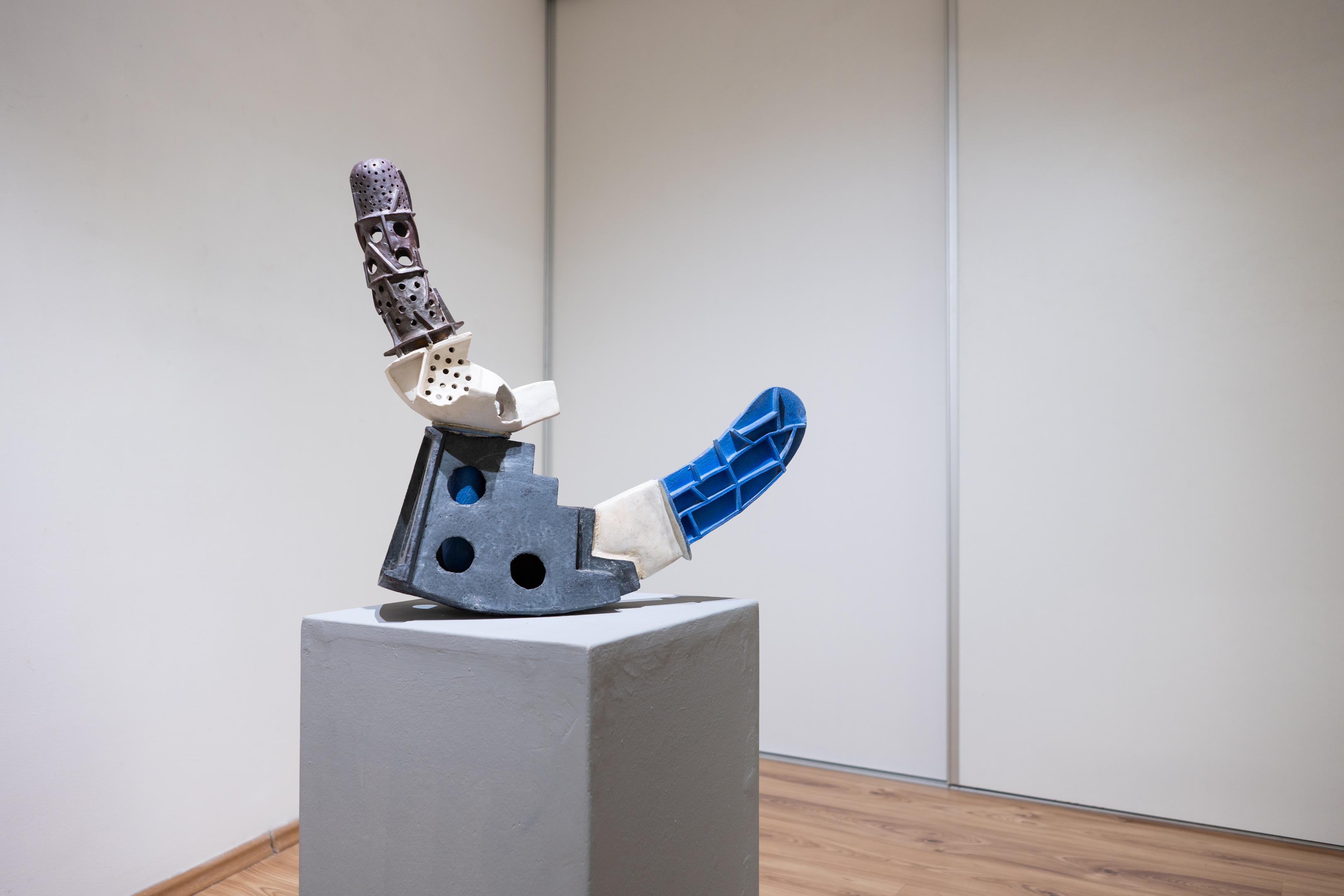
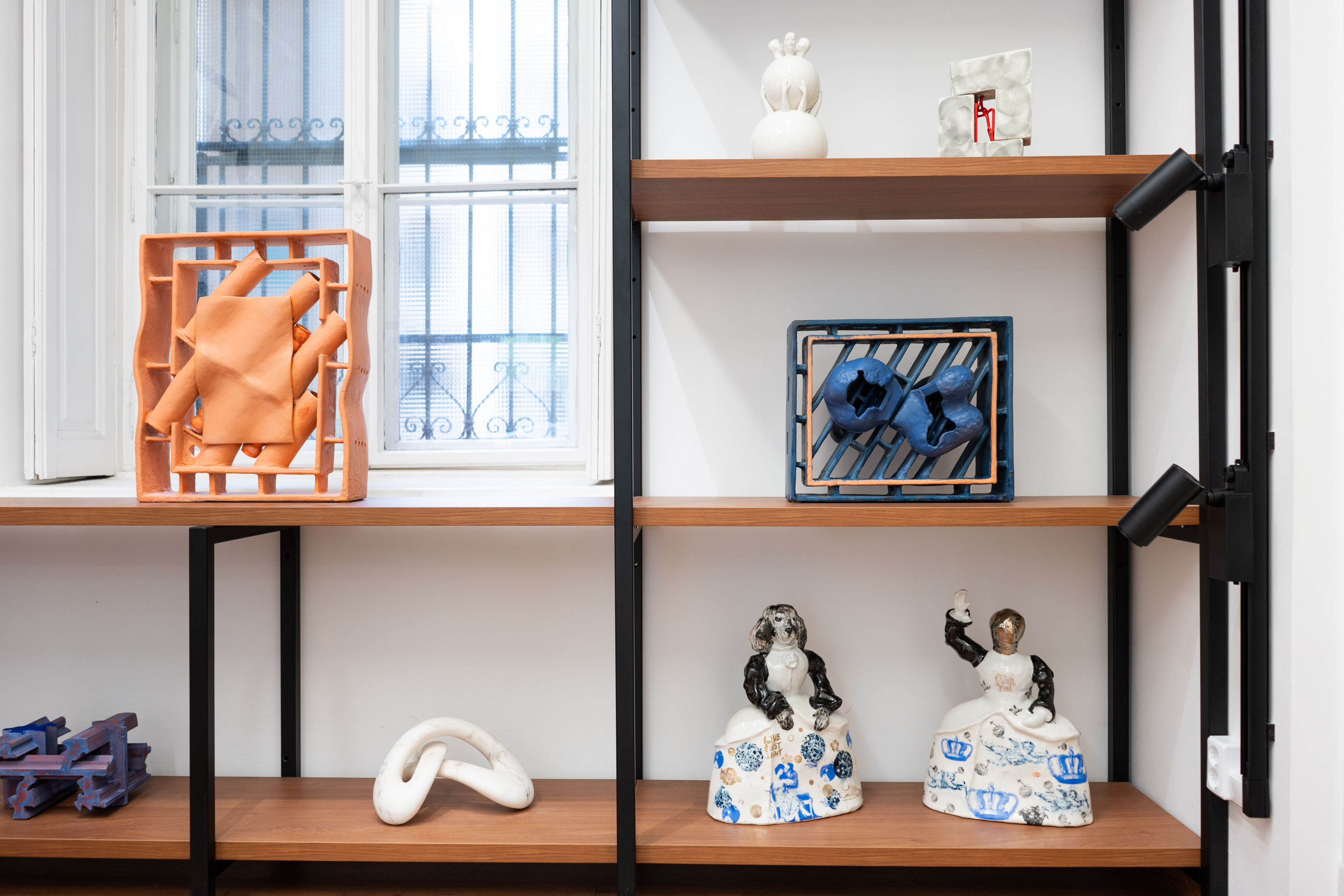
In the second half of the 1970s, his work was defined by a geometric and constructivist approach. These strong, clear structures are not merely formal experiments — structure is always a carrier of conceptual content. Grids, openings, undulating surfaces, and tightly composed spatial arrangements create a world in which order and freedom, discipline and playfulness coexist. These constructive structures continue to appear throughout his oeuvre, constantly enriched with new meanings.
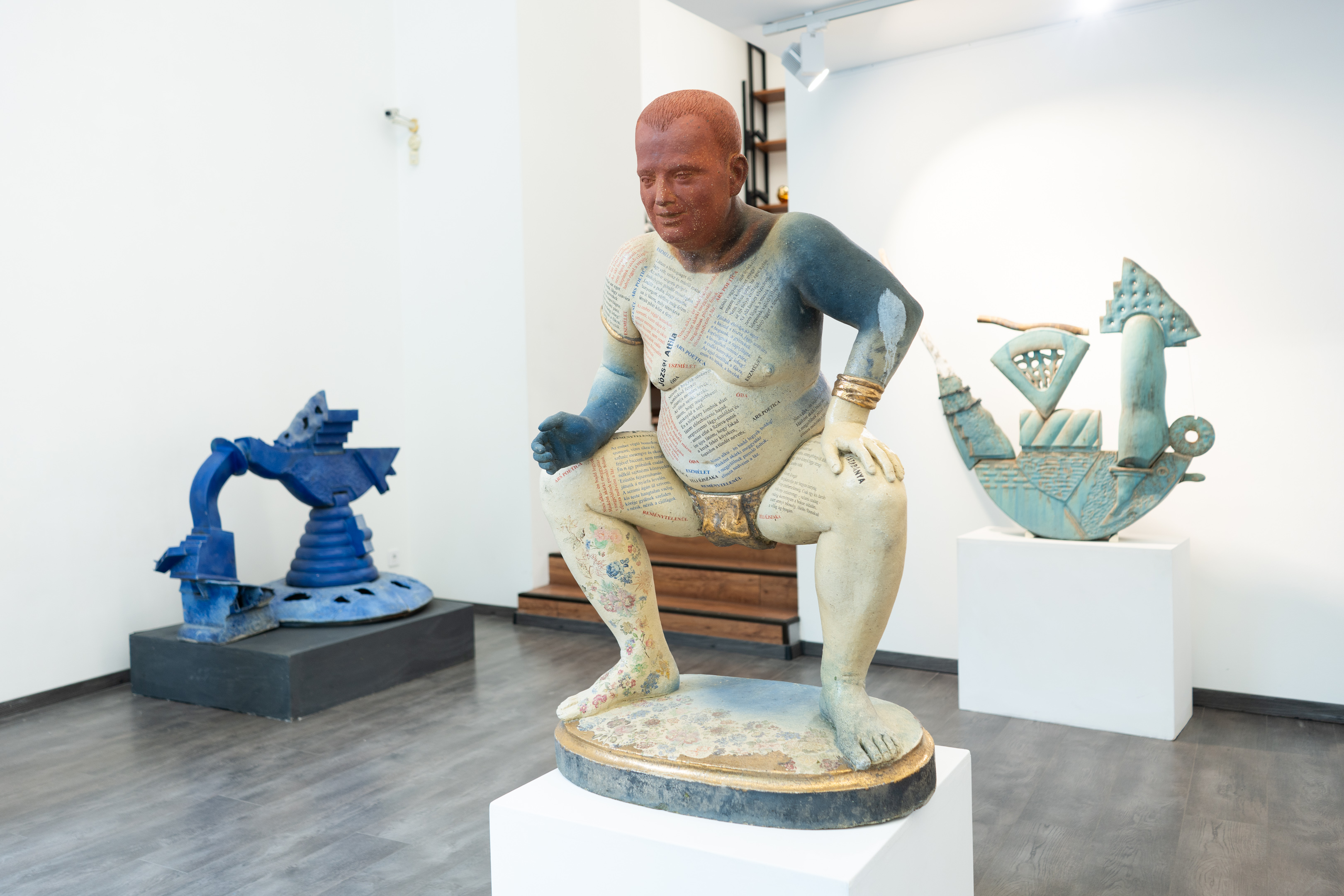
In the 1980s, pop art-inspired sculptures emerged, with strong figurative content and ceramic interpretations of everyday life’s ironic elements. The roast chicken, the oil can, and other symbols of consumer culture appear as both grotesque sketches and affectionate ironic gestures — at once critical and playful. A ceramic paper plane on the wall, a crumpled oil barrel covered with stickers.
If one work were to be highlighted from this period, it would be Sumo, the most characteristic piece of the era. In this phase, Pázmándi does not merely align himself with international tendencies but translates them into his own language: criticism of consumer society is not always provocation, but — from behind the Iron Curtain — a subtle, humorous reflection on the surrounding world.
One of the recurring and constant elements of his oeuvre is the use of the color blue / blue glaze, which becomes increasingly significant from the 1990s onward. The shades of blue are not merely decorative choices: for Pázmándi, blue is the color of space, depth, calm, and conceptual clarity — a precise tool for constructing form. The blue surfaces are at once cool and sensual, distant and yet compelling, inevitably drawing the viewer’s gaze.
“Blues” — though in this case the wordplay is not meant in a tragic sense. The blue lives purely, balances, defines contours, and completes the compositions.
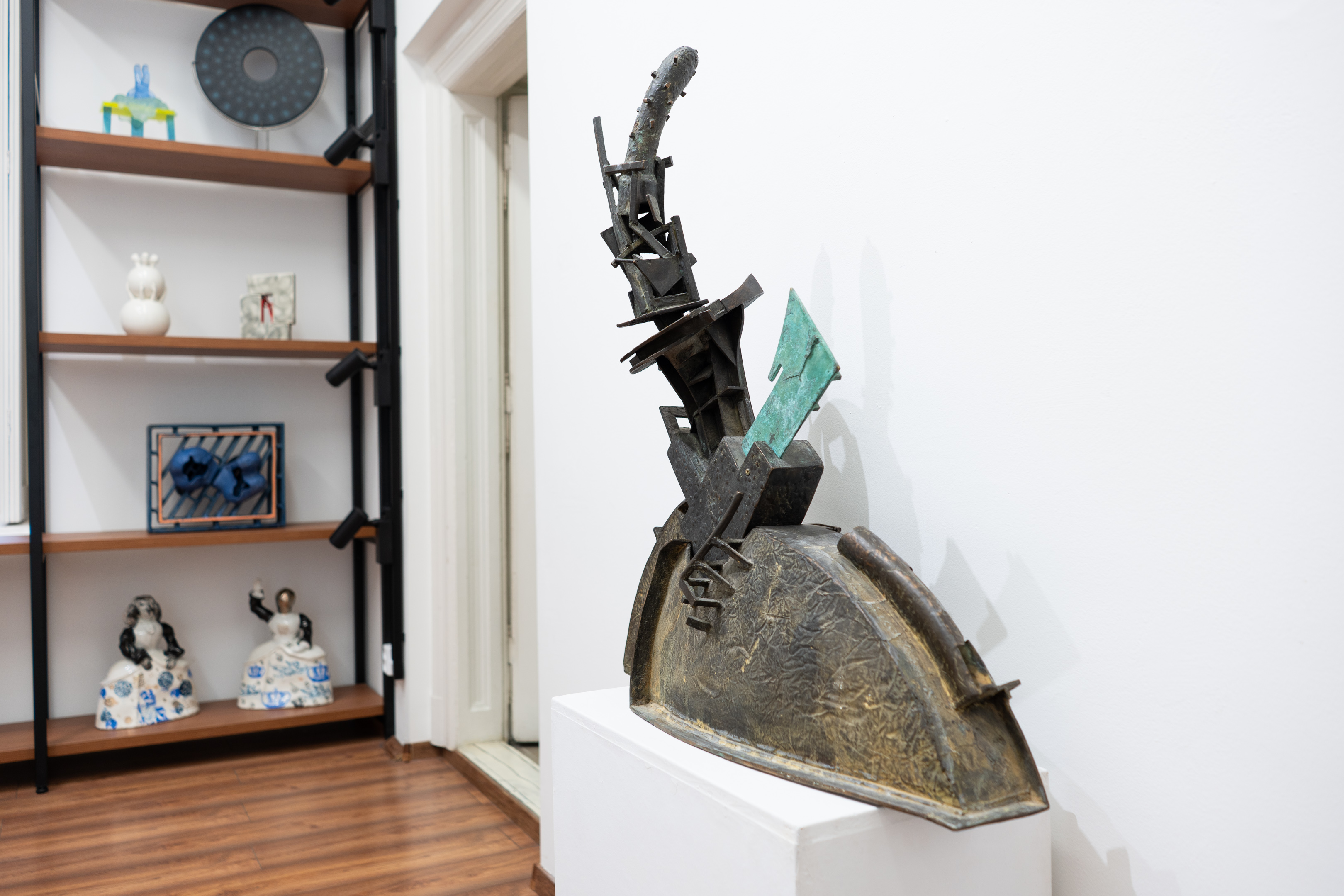
From the 2000s onward, new materials enter his sculptural development: metal, wood, and glass become new voices, while the dialogue with space remains central. He also masters porcelain, shaping it in surprising scales — a technical achievement in itself. It becomes a tool of refinement, of human sensitivity, almost a final flourish.
His public works cannot be shown here, but this oeuvre also includes major commissions — fountains, architectural sculptures, monumental compositions — which continue to define many urban spaces today.
Alongside his artistic practice, we must also mention his pedagogical work: for more than twenty years he taught at the Hungarian University of Arts and Crafts. For his students, he was not only a master but also someone who passed on a way of thinking: respect for form, courage for experimentation, humor, and the taste of artistic freedom.
Here and now, in front of the many works of his career, we pay tribute to an artist who has not only enriched Hungarian ceramic art but has shaped it with new directions and perspectives. His works are at once intellectual and sensual, disciplined and free — and above all, deeply human.
Our aim is that this exhibition helps us rediscover the layers of Antal Pázmándi’s art again and again: the depths of blue, the playfulness of pop art, and the pure strength of constructive forms.
Thank you for your attention.
// Opening speech by Zoltán Lublóy, porcelain designer, designer, and curator of the exhibition.