
Figurative group exhibition
group exhibition
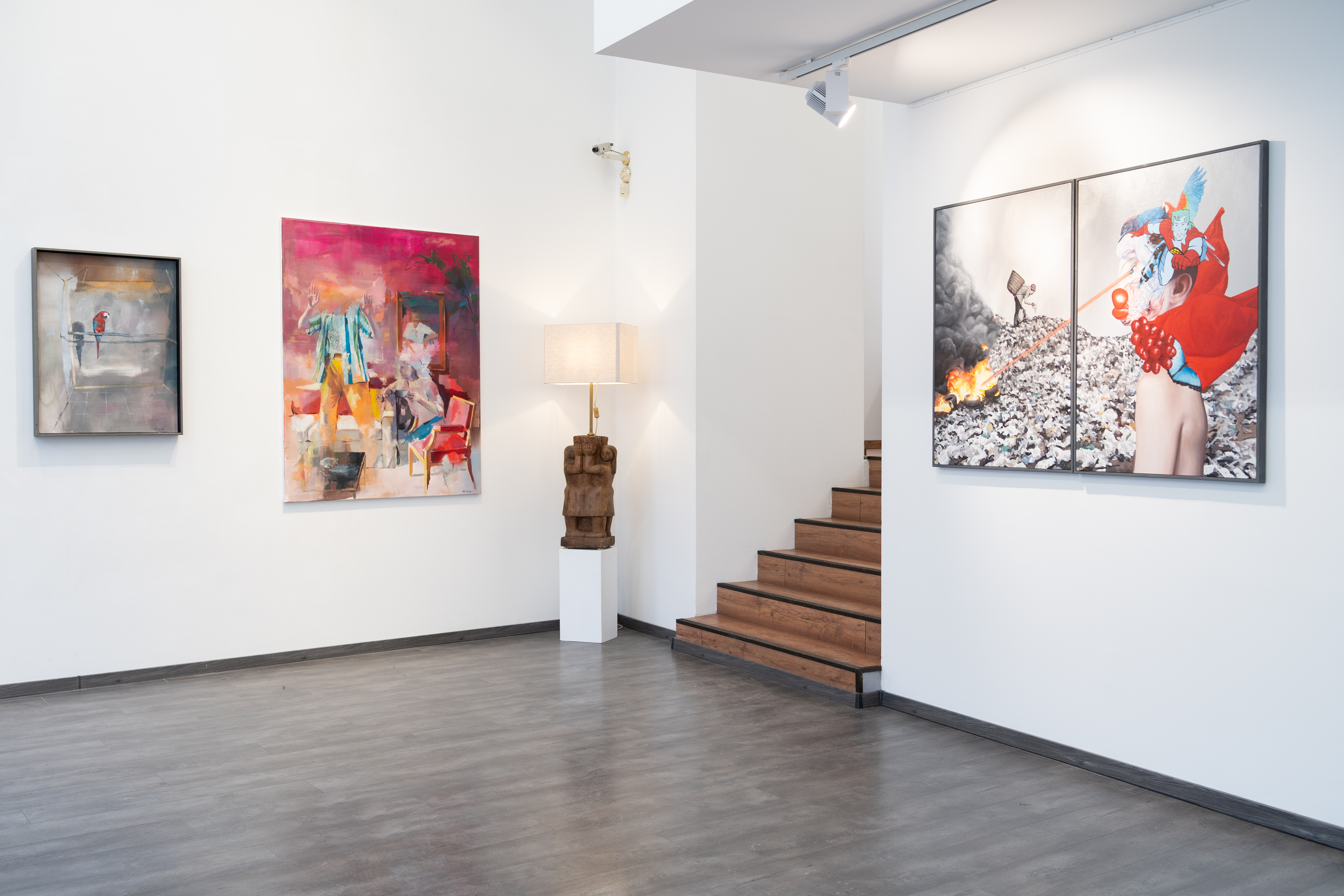
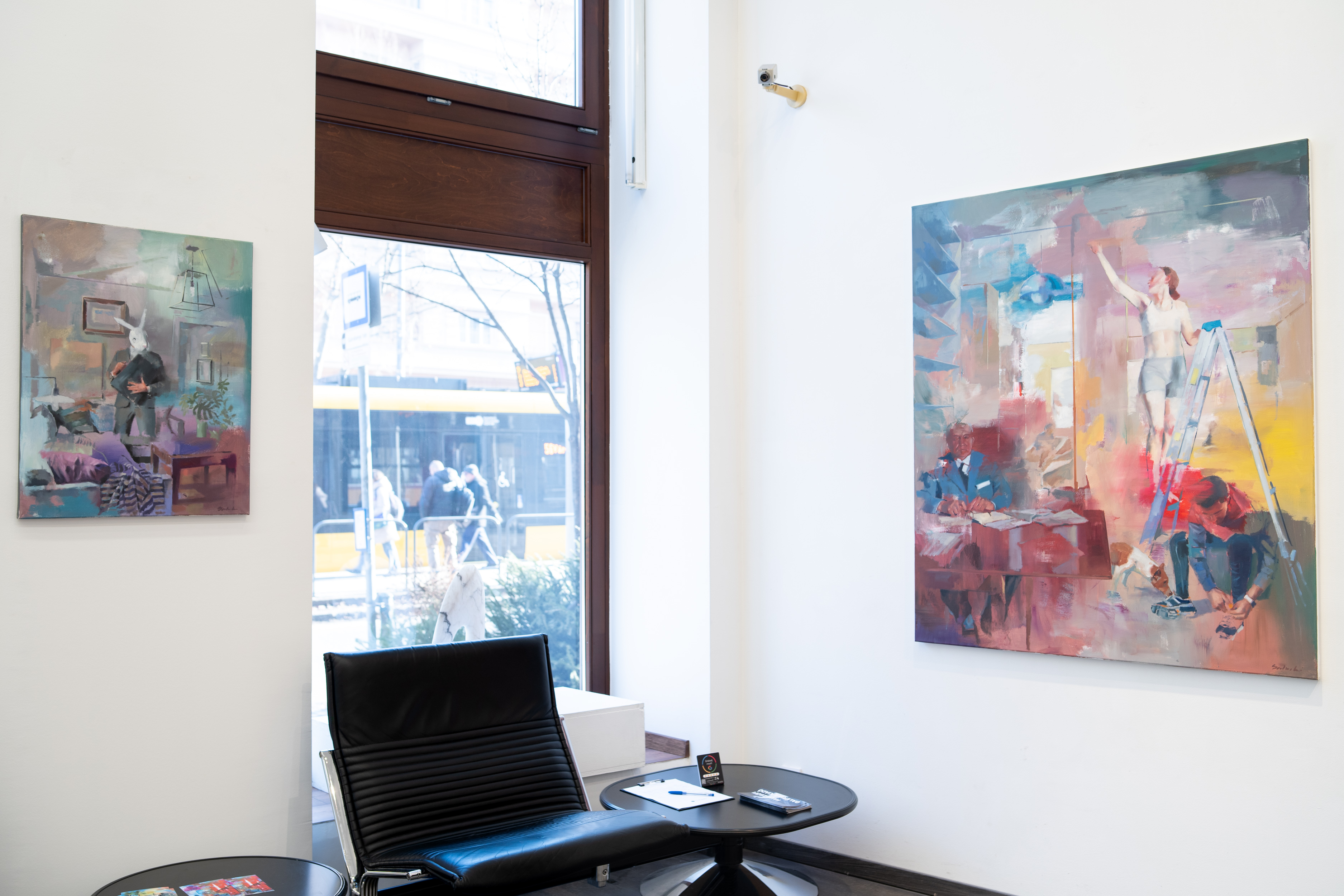
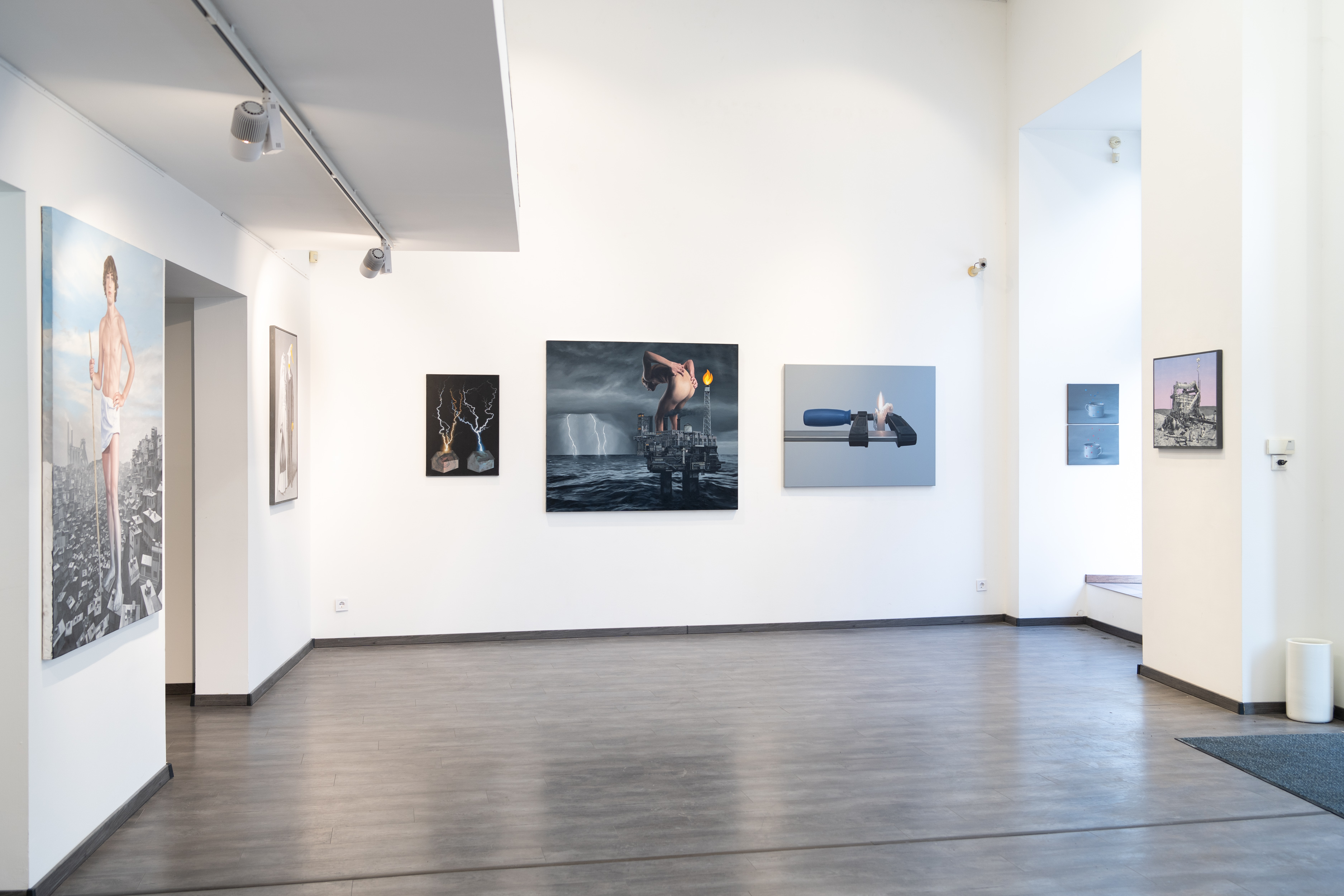
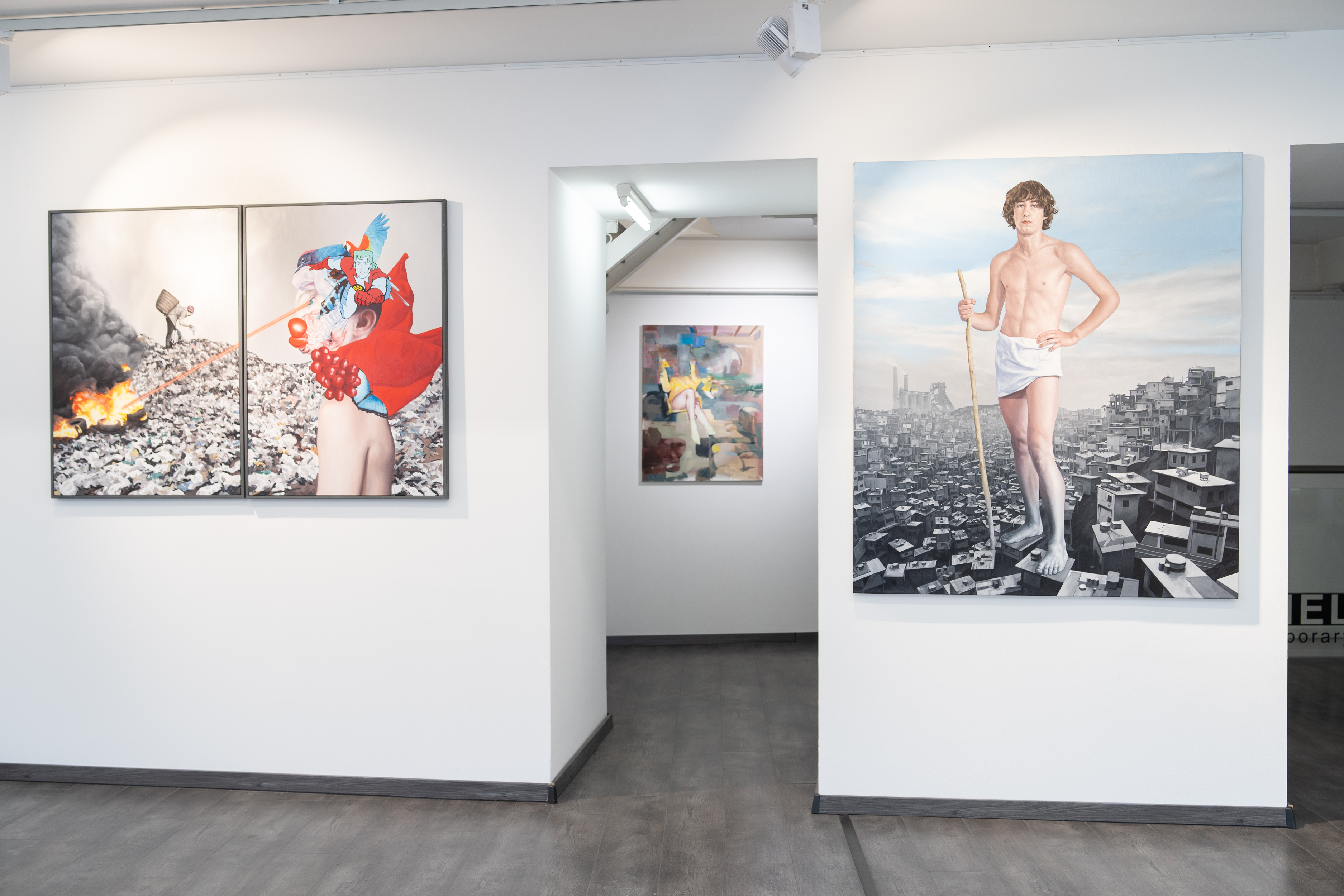
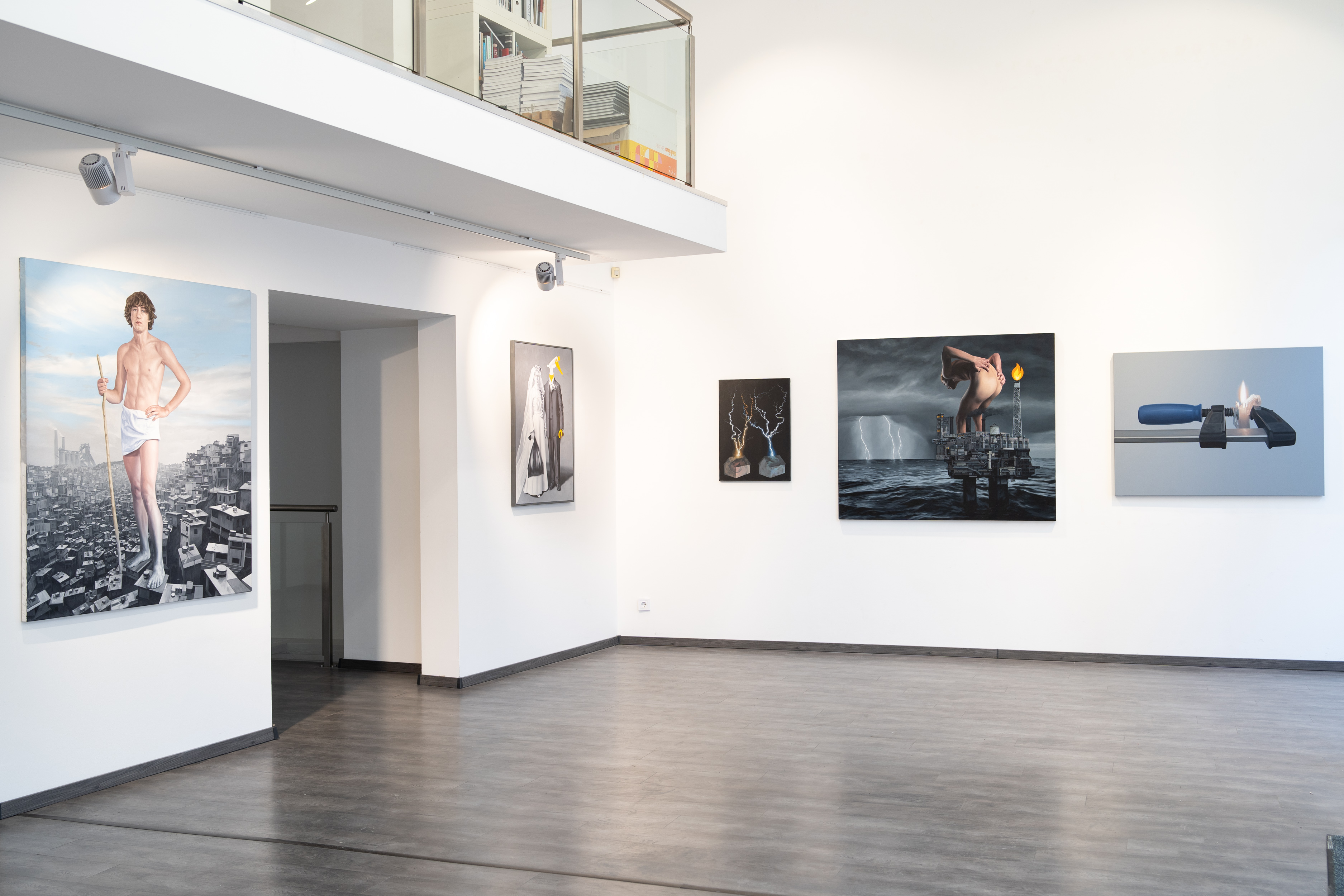
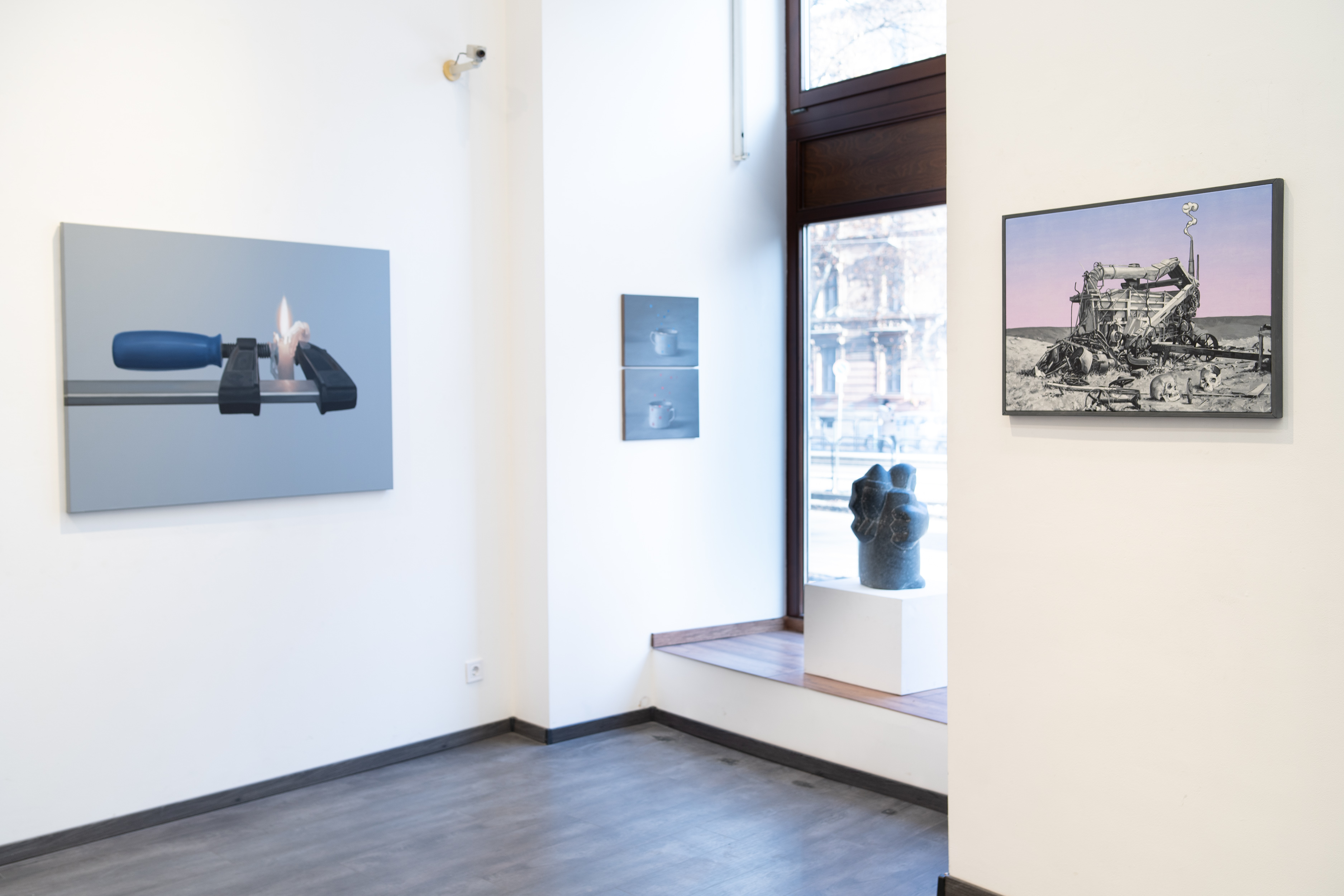
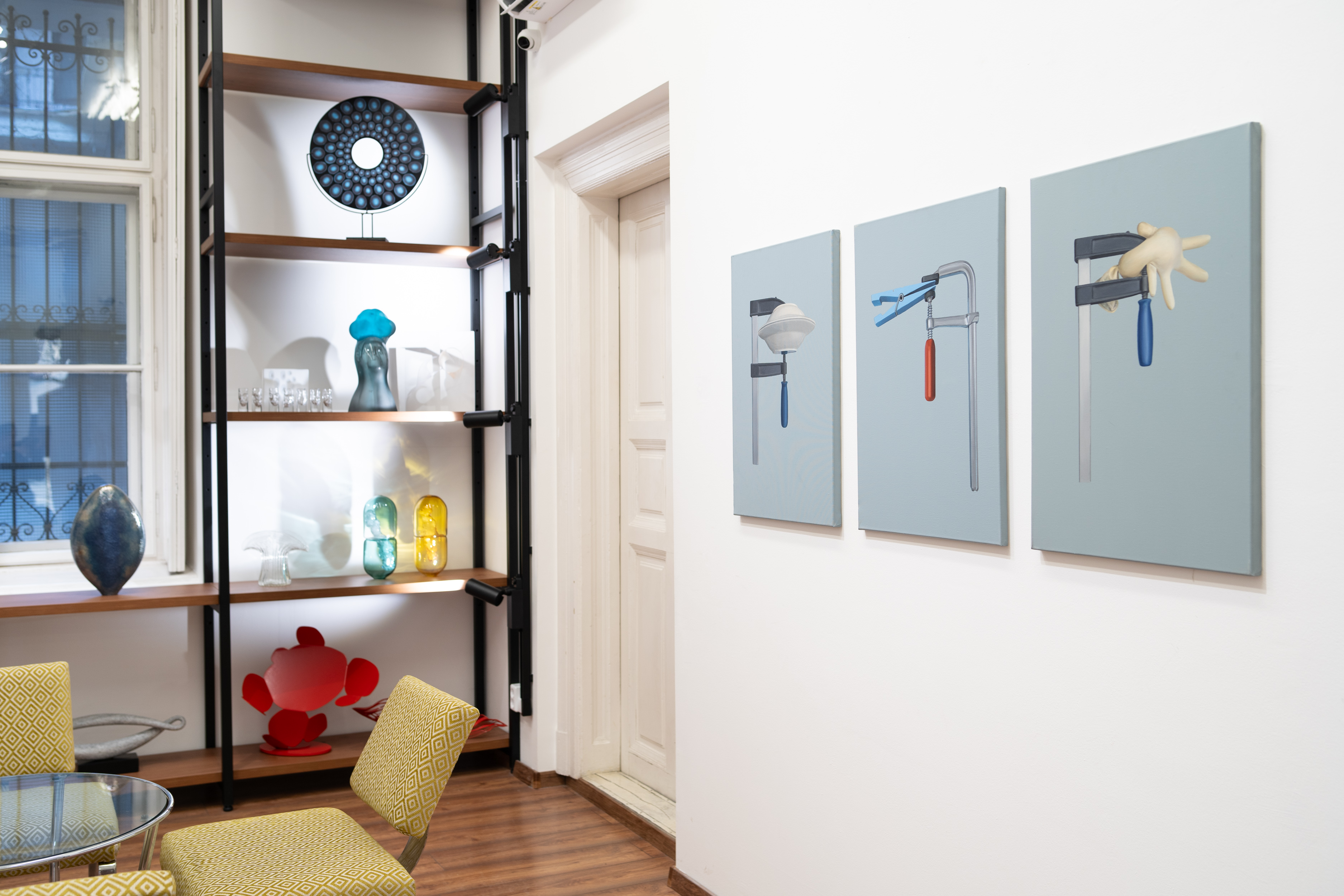
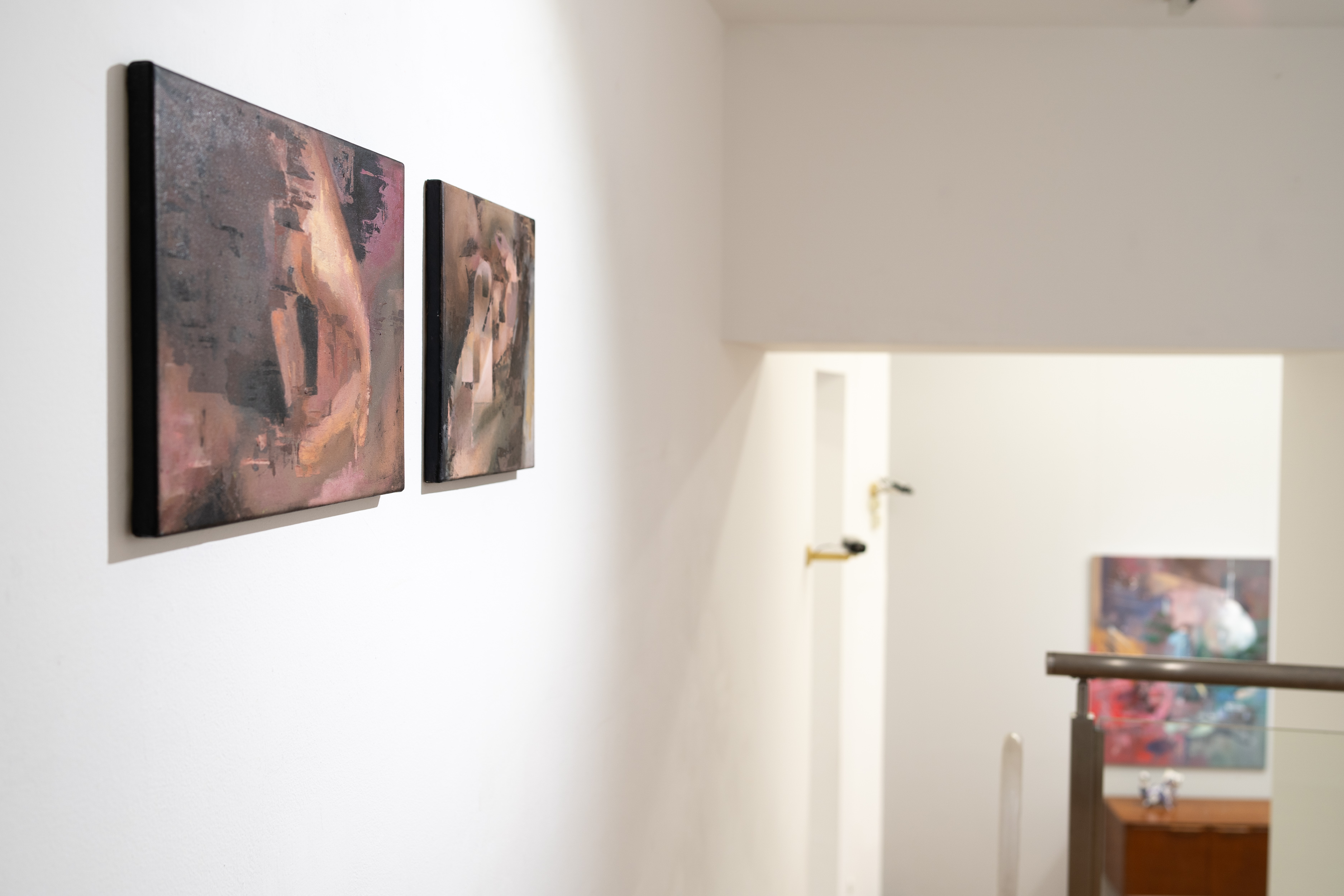
The exhibition examines questions of meaning-making, perception, and social position at the intersection of figurative and abstract tendencies in contemporary painting. In the presented works, the body, space, and pictorial construction function not as narrative illustrations but as structuring elements, generating tension-filled relational systems. The juxtaposition of diverse artistic strategies creates an open interpretive field that invites the viewer to active, reflective engagement.
Domonkos Benyovszky-Szűcs’s painting focuses on the relationship between pictorial construction and perception. In his works, the body and the material environment appear not as narrative agents but as structural elements, foregrounding questions of control and vulnerability.
Andrea Katalin Gulyás’s painting explores the possibilities of meaning-making through the reduction and displacement of visual elements. In her works, everyday motifs are organized into abstract systems in which painterly decisions become tools for directing attention.
In Endre Kis’s works, figurative representation operates on the threshold between narrativity and symbolic overload. His painting consistently reflects on the instability of individual and social positions, treating pictorial space as a network of tension-filled relationships.
In his paintings, Szabolcs Szolnoki transforms everyday spaces and situations into dreamlike, dislocated scenes in which figures exist in uncertain, transitional states. His practice examines the delicate balance between personal narrative and collective experience.