
György Jovián and Dániel Kiss - SUPRA OMNIA
duo exhibition
Opening of the exhibition of György Jovián and Dániel Kiss
Only human beings are capable of marvelling at the beauty of the currents concealed within stones, at the beauty of the fragmented patterns of fallen leaves.
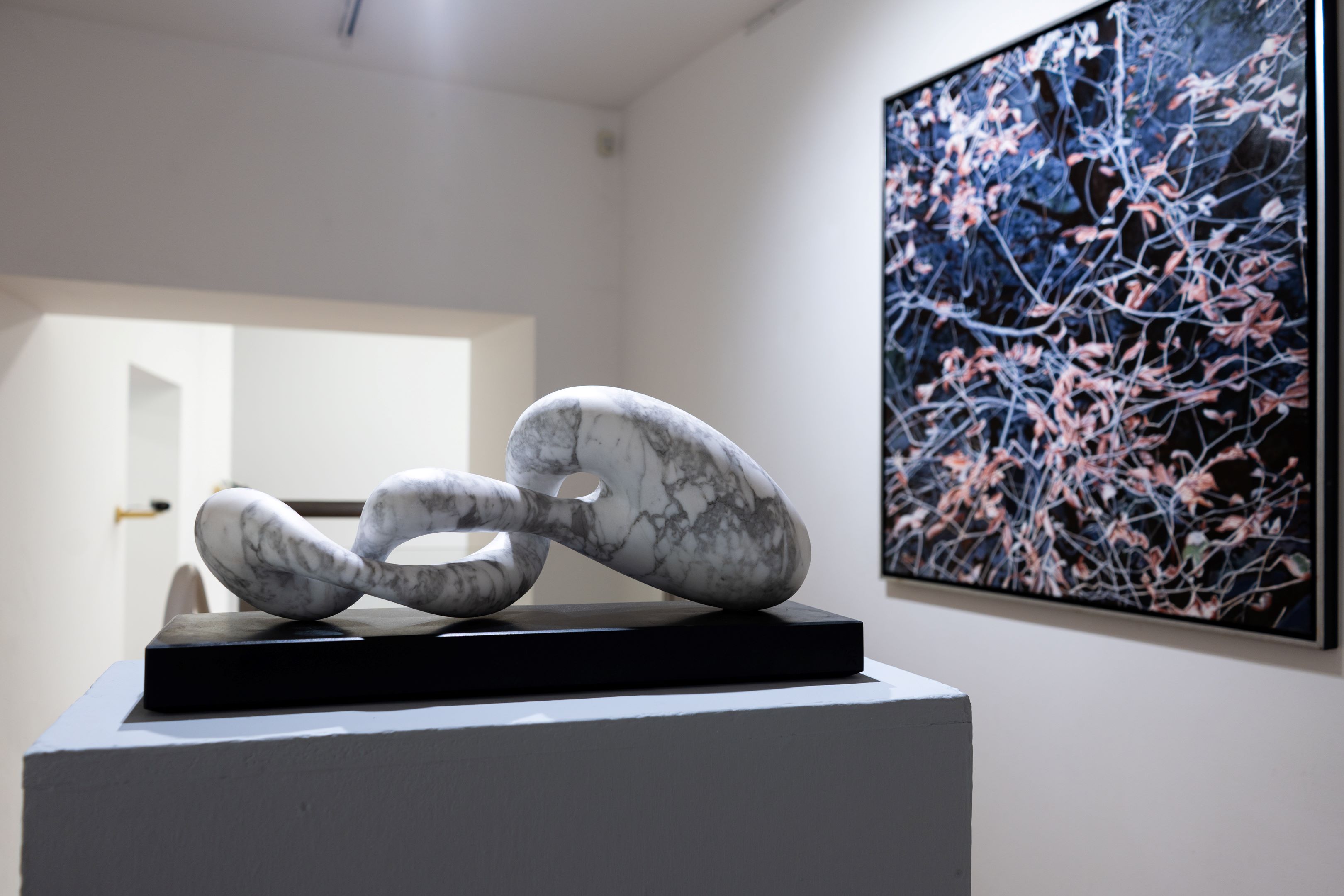
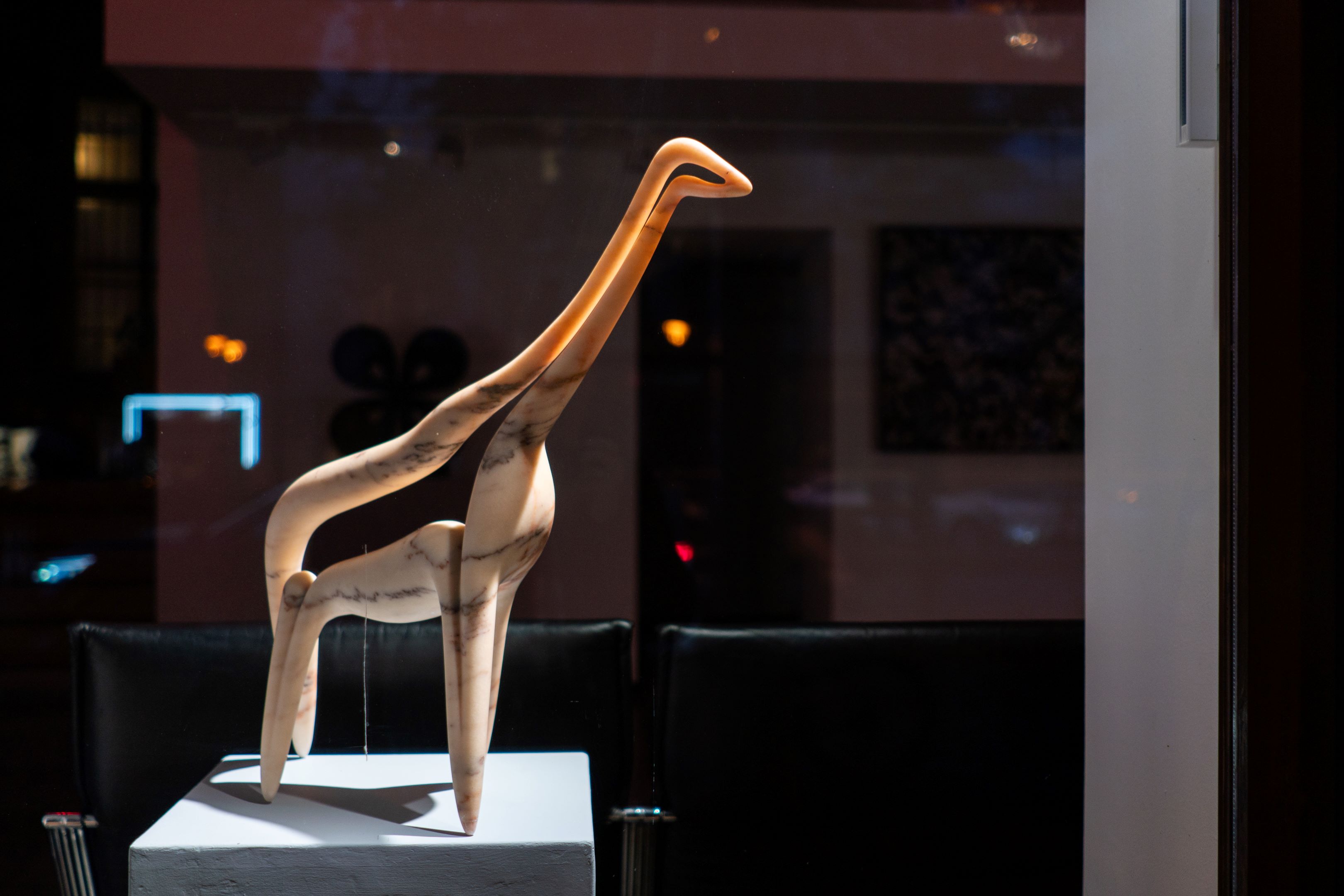
We are capable of imagining the geological processes that took place before the emergence of life and led to the formation of the rocks we see today. We might call the dramas and periods of stillness that preceded the appearance of humankind pre-human conditions. The materials revealed in Dániel Kiss's works bear witness to a state of existence that predates humanity.
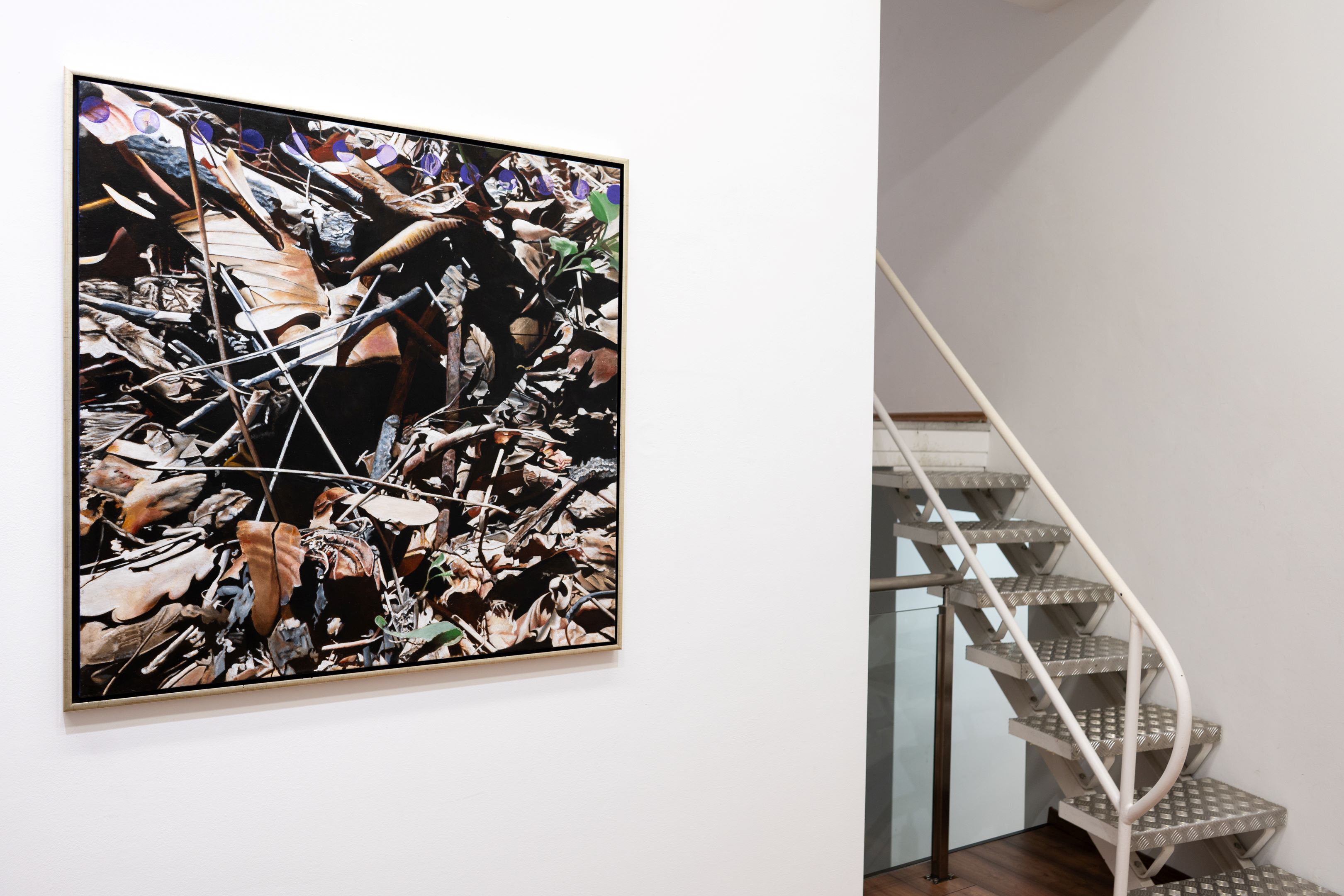
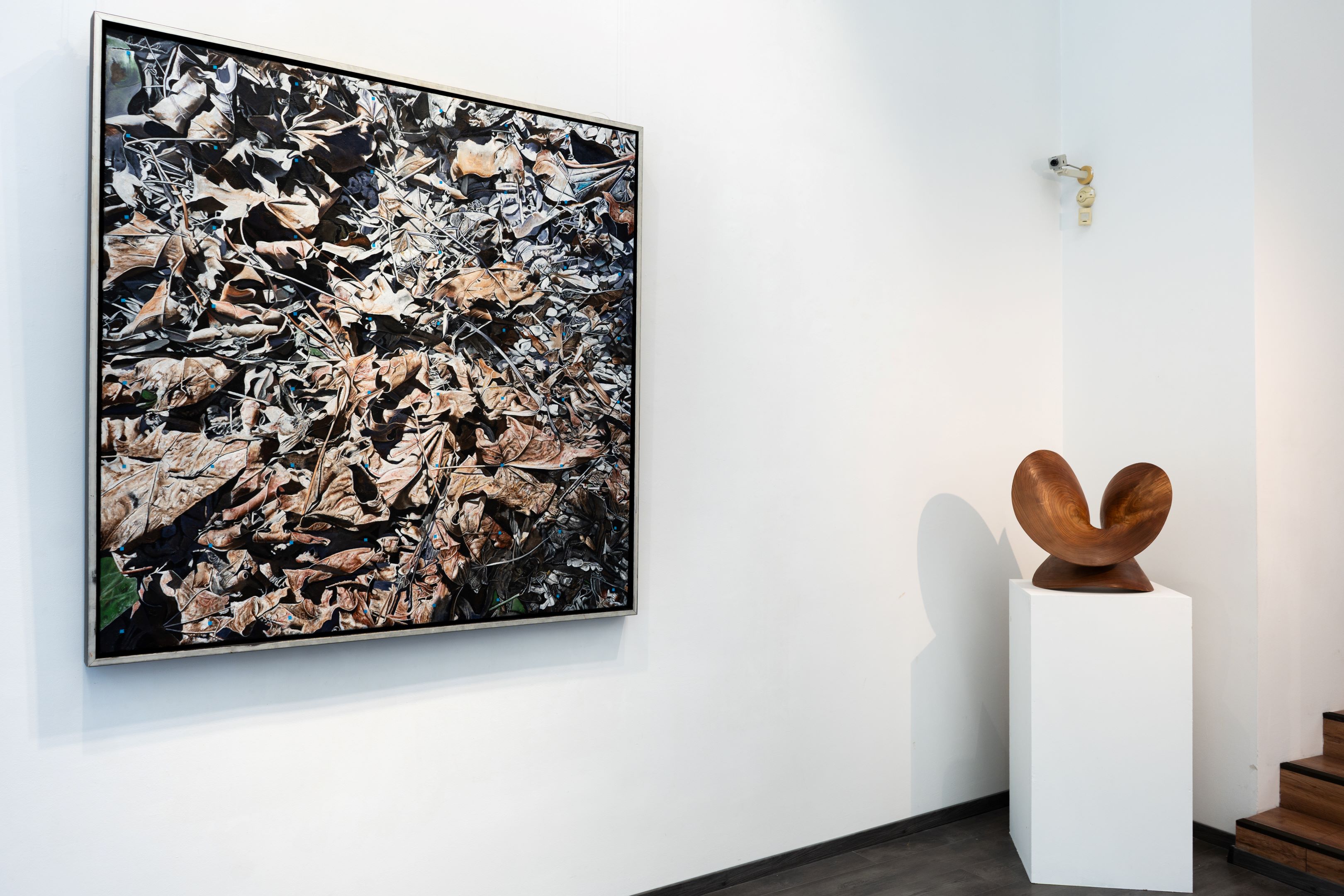
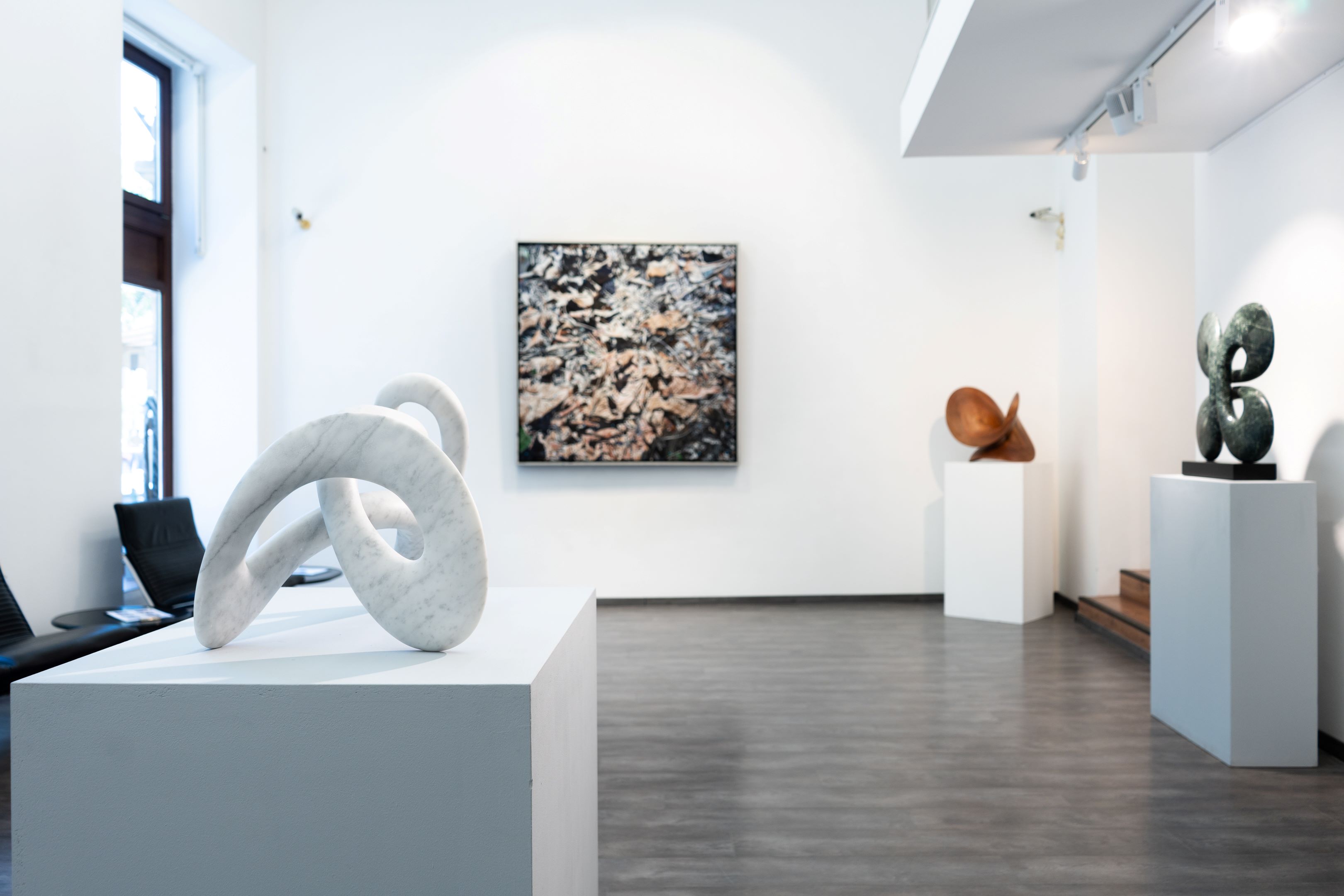
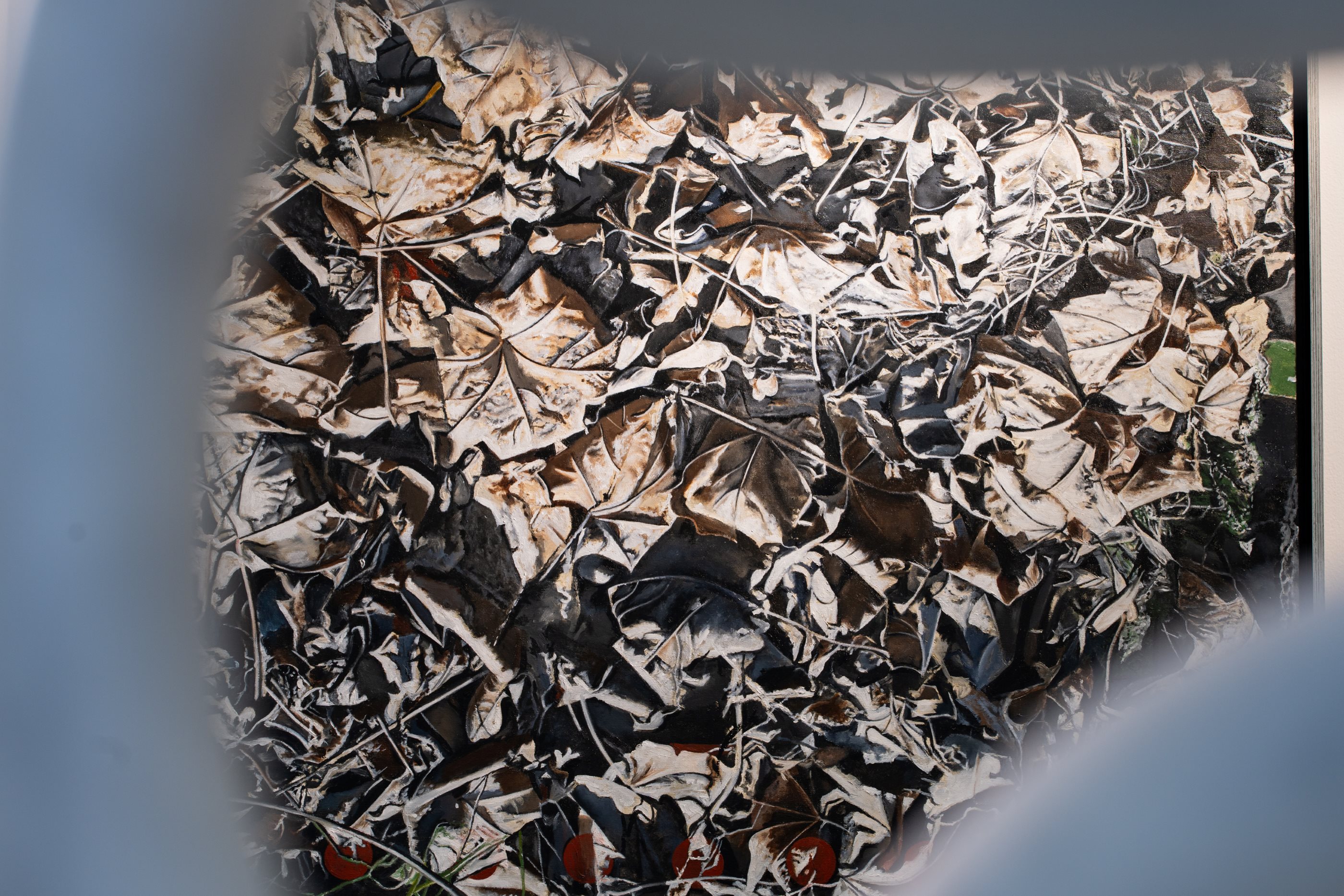
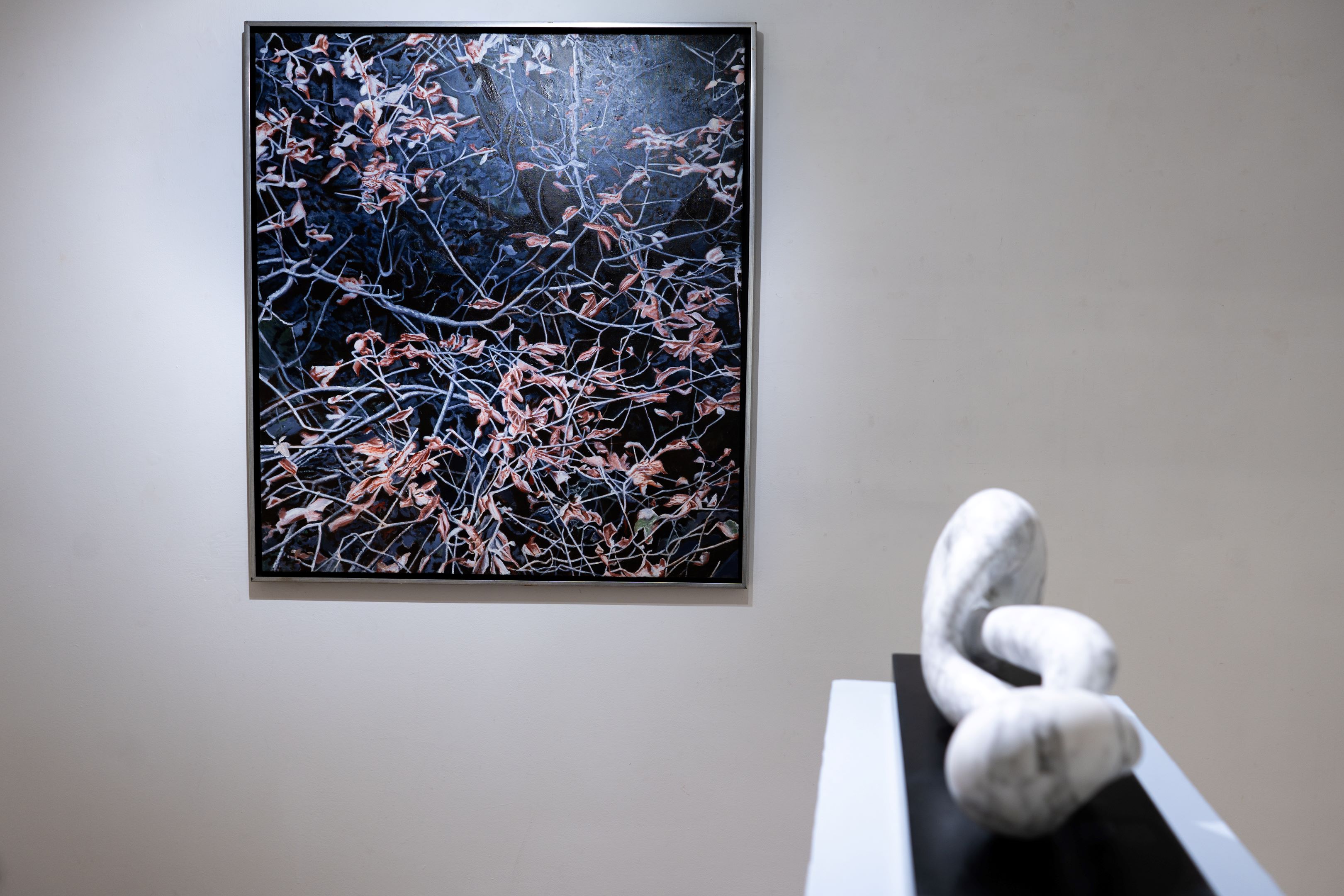
The title Autumn could be given to György Jovián’s paintings. The works on display here document one phase in the cyclical transformation of nature. As part of nature ourselves, we too belong to this cycle of change. The passing of leaves marks one of the fundamental conditions of living nature. We are accustomed to it; we accept it. We live with it.
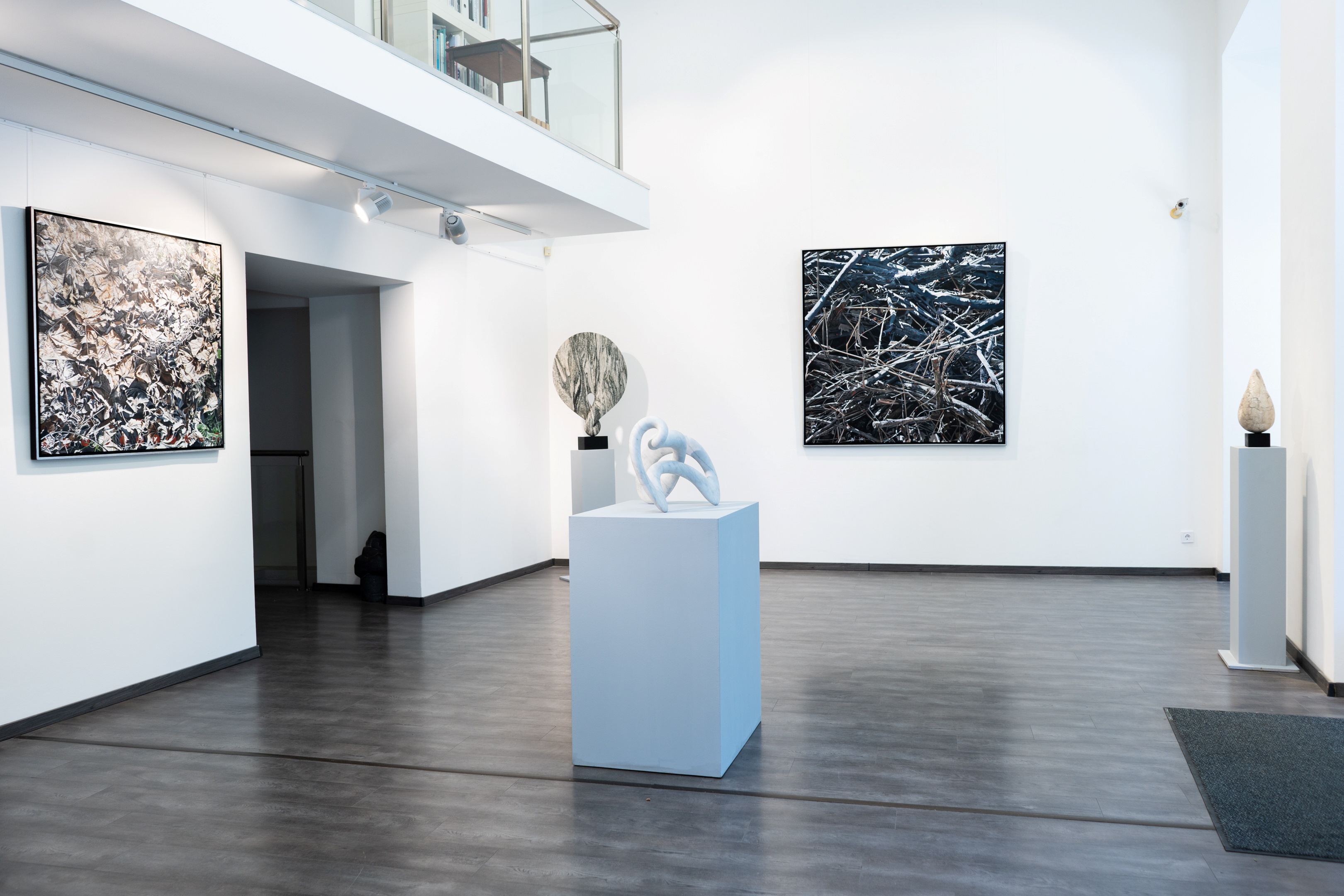
Two days ago, when I entered the gallery, I was struck by the diversity of the harmonies unfolding before me. The joint exhibition of the sculptor and the painter conveys a sense of tranquillity and beauty. The waves depicted in the works resonate with the scattered arrangements of fallen leaves and leaf stems, their forms arising spontaneously. The art of these two artists strikes a chord in this bright, clearly articulated gallery space.
György Jovián is a contemporary of mine, and we have known each other for a long time. I have followed the development of his career for many years. I have known his work since the early 1980s, and we have participated in numerous exhibitions together. During a difficult period in my artistic life, he invited me, in his capacity as curator, to exhibit at the Merlin Gallery, which he directed. In 2016, we also worked together on an exhibition at Künstlerhaus in Munich.
It is gratifying to see the consistency of his artistic development, the arc of a career that leads from his early works, through two exhibitions at Műcsarnok, to the paintings on view here today. From the very beginning, his paintings have belonged to the currents of international art. They are distinctly individual and demonstrate a high level of professional mastery. At the same time, I feel that his paintings engage with the world at large, extending beyond the realities of our shared Central European and Central-Eastern European lives. This is surely one of the reasons why he has received awards not only at home but abroad as well.
In Portugal and Belgium, too, art connoisseurs, intellectually receptive viewers and those capable of feeling and intuitively sensing the essence of things recognise that Jovián’s paintings contain something universal, something that speaks to them as well.
His Maremma series depicted landscapes reminiscent of the surface of the Moon, devoid of human beings and vegetation. His work Van Gogh’s Shoe was exhibited for an extended period as part of the presentation of the contemporary collection of the Hungarian National Gallery. The curators of that time, too, recognised the significance and complexity of the phenomenon.
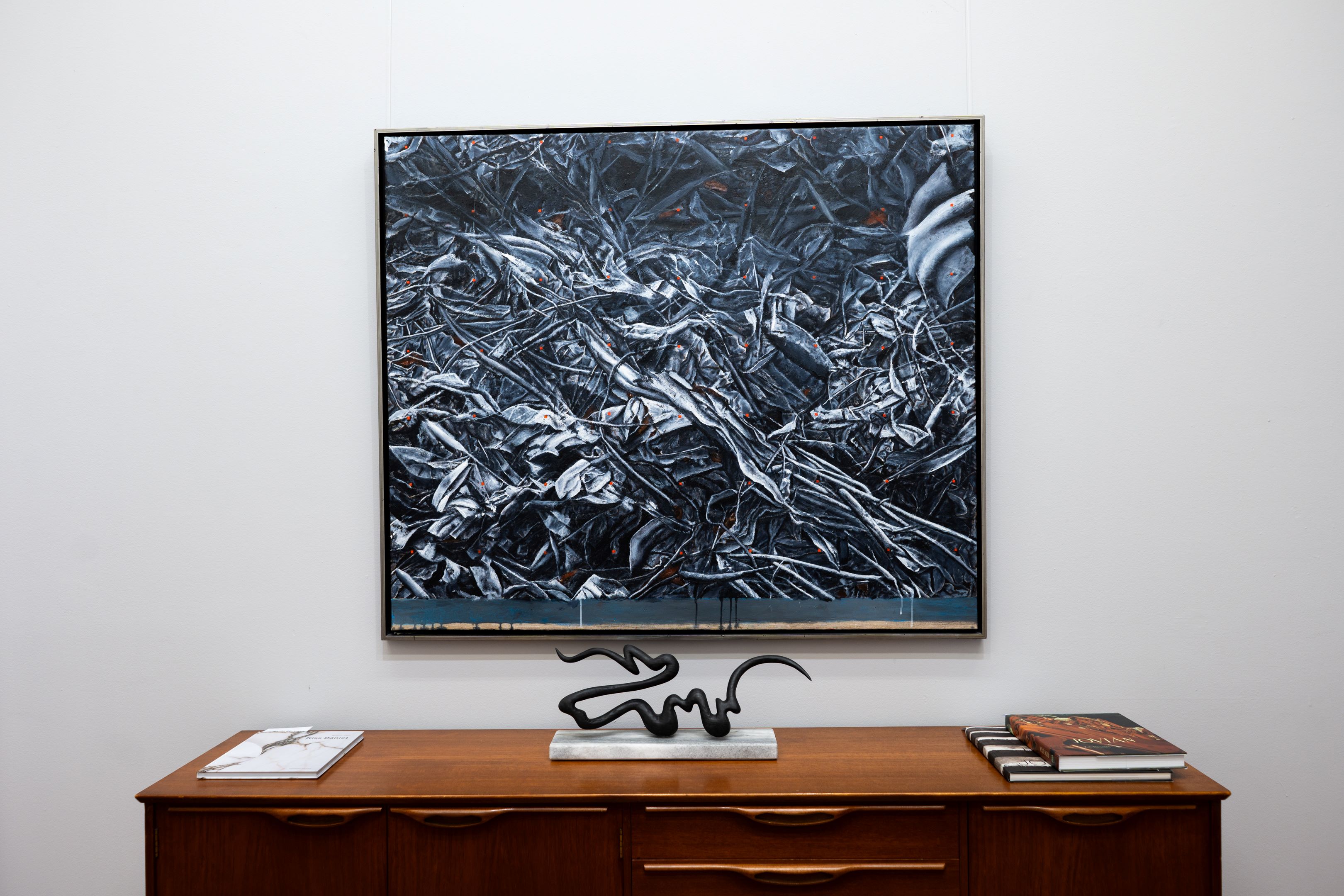
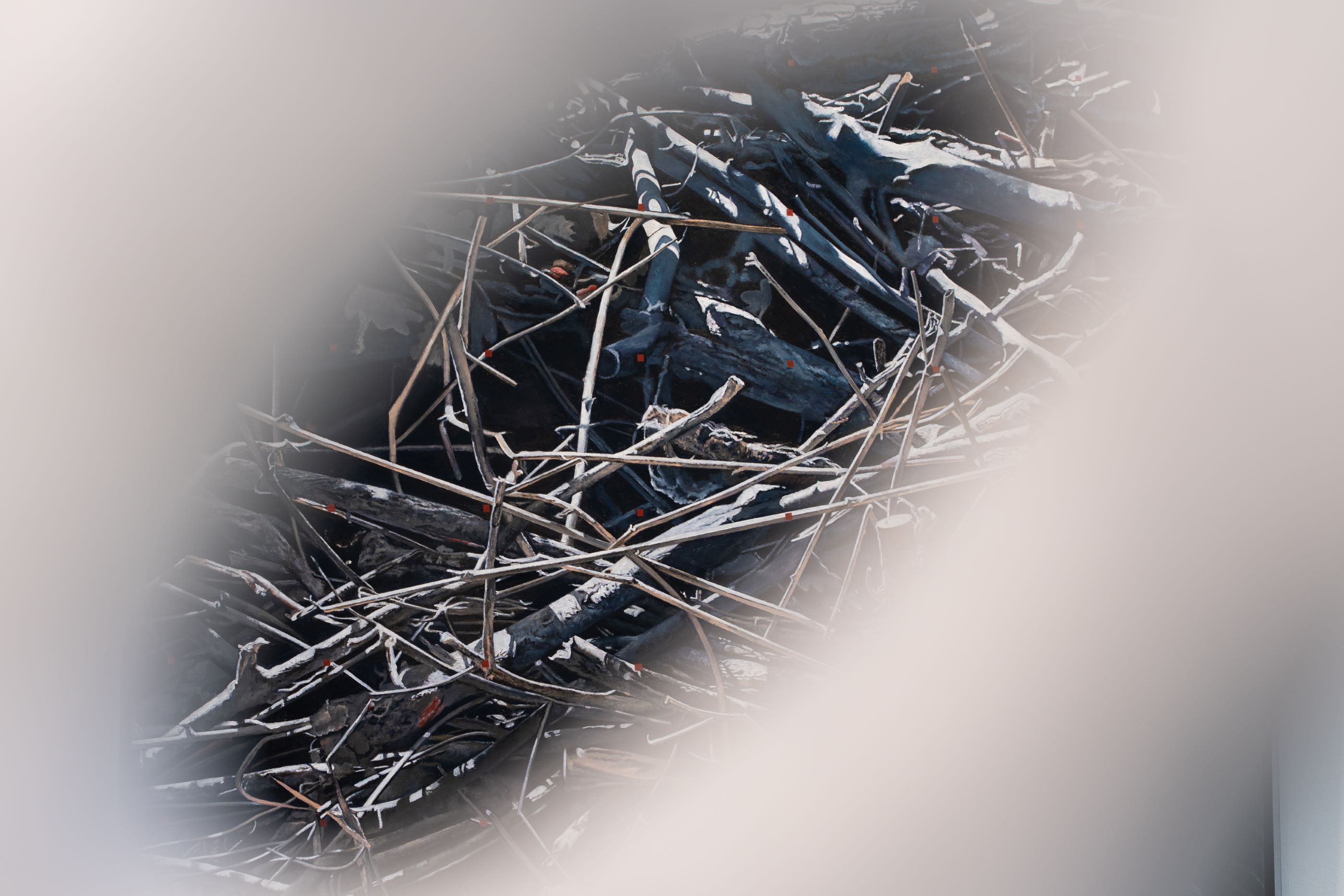
Jovián is a consummate painter. Even someone who sees only the leaf-covered surfaces of his current paintings can imagine that this artist is equally capable of creating important, indispensable works through figurative painting. I think of his self-portraits, made following an accident; of his paintings depicting figures pushed to the margins of human existence; and of his portraits of contemporaries and friends, including an art historian and a distinguished musician. At his most recent exhibition at Műcsarnok, he presented only a few examples of these works. Instead, his paintings featured the tangled heaps of machinery, wires, sheets of metal and fragments found in scrapyards: objects that had once served a purpose but had since become wreckage, piled upon one another.
In the second half of the twentieth century, during the early 1960s, the European dominance of painting and the visual arts—particularly that of France—was supplanted by American art. I would like to mention two significant artists: Jackson Pollock and Robert Rauschenberg. Under their influence, or perhaps independently of it, Informel painting and the aesthetics of dripping paint emerged in Hungary as well—I am thinking primarily of Dezső Korniss—as did Rauschenberg’s approach to painting, which expanded Abstract Expressionism through the incorporation of Pop Art. One of its most important representatives in Hungary was László Lakner. I should mention at the outset that László Lakner recognises the importance of György Jovián’s art, and the two share both a professional and a personal friendship.
The third artist I would like to discuss is the French artist Arman, a representative of Nouveau Réalisme and French Pop Art.
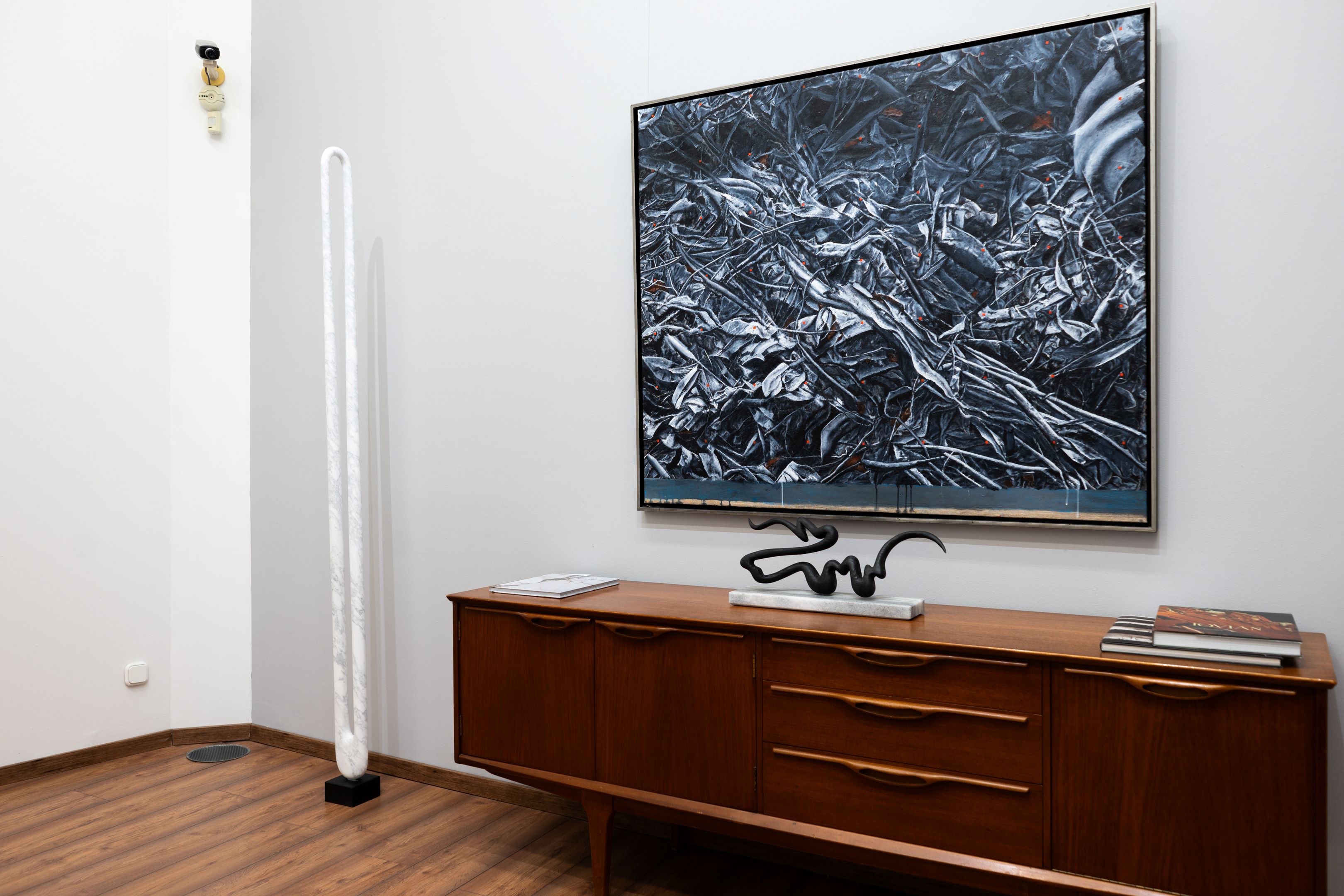
What these artists created seemed impossible to continue or carry forward. And yet I feel that, in an imaginary museum, Jovián’s paintings—including those on view in the present exhibition—could confidently be placed alongside Pollock’s Informel works or Arman’s accumulations of objects.
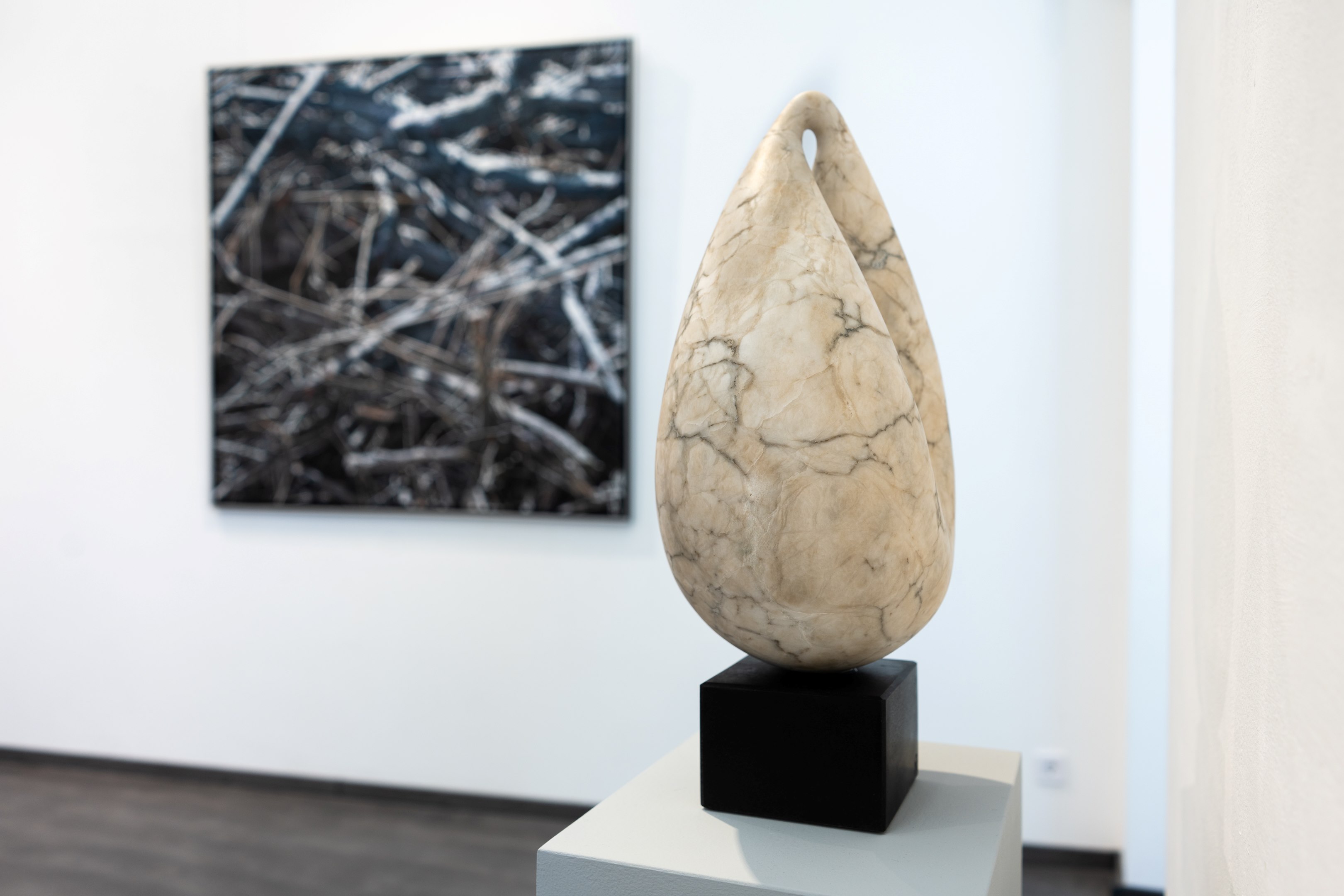
Jovián does not simply repeat their gestures, nor does he drip paint in the manner of Pollock. Instead, he creates the very fabric of his paintings through an approach to painting that is at once ascetic and joyful. What we see is nature itself, fragments of real objects, remnants of branches and leaves, captured at a stage before they turn into earth. Each possesses spatial extension, shadow, colour and a history of its own.
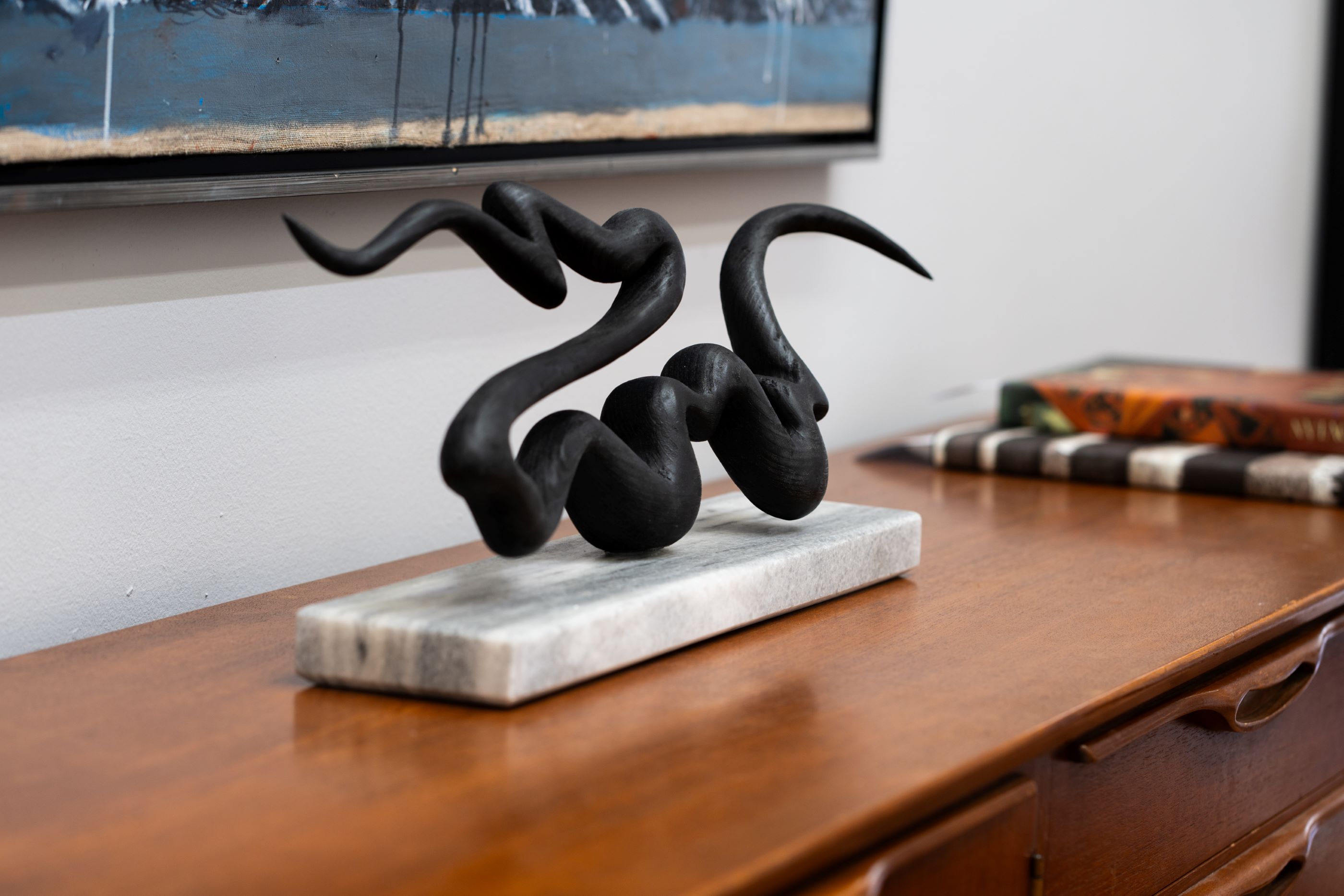
Looking at Dániel Kiss's sculptures, I am reminded once again of the imaginary museum—invoking André Malraux’s concept. Even here, in this very exhibition, there are several sculptures that belong in a museum. If we take a broader view of the young artist’s career, for example through the book published by Körmendi Gallery, we find numerous sculptural works that would hold their own in the international contemporary art scene and in a contemporary museum.
He addresses spatial problems that are very much in the air today. Not everyone has the ability to discern, amid the chaos of great artistic currents, the signals pointing towards significant trends. Fewer still are capable of responding to those signals by creating original sculptural solutions of their own. I consider Kiss Dániel to be one of these artists.
Tibor Wehner, perhaps the art historian who has devoted the greatest attention to contemporary sculpture, regards Kiss Dániel as a significant member of a new generation that is renewing the art of sculpture.
When we seek to grasp a new phenomenon, we look for analogies and precedents. Towards the end of the 1960s, a remarkable book appeared. Tommaso di Lampedusa’s volume of poetry, Lighea, was illustrated with sculptures—or, perhaps more accurately, accompanied by them. They were mermaids, female faces and pebble-like forms carved by Miklós Borsos from white marble and finished with polished surfaces.
I often took this book down from our bookshelf. It radiated an atmosphere of artistic freedom. It was through these works, and later through the objects of Gábor Csóti, whose practice was close to applied art, that I first marvelled at the beauty revealed in the grain of wood and, in Borsos’s work, in the veins of stone. Kiss Dániel’s works on view here have evoked that same feeling in me.
At the end of the nineteenth century, Ernst Haeckel’s book Kunstformen der Natur (Art Forms in Nature) was published, presenting colourful illustrations of microscopic phenomena at an exceptionally high artistic level. Alongside natural forms visible to the naked eye, the forms of microscopic organisms—diatoms and paramecia, among others—became visible to us. An entirely new universe came into view.
Kiss Dániel creates sculptures based on images that record the internal movements of the fundus of the eye. His works also include forms reminiscent of sea urchin skeletons and the structures of corals. What connects his almost figurative works, which evoke animals, with his more abstract sculptures is the way in which interwoven forms are unfolded and revealed.
Intricately interlocking puzzles and wooden chains carved from a single piece of wood have long existed in folk art. This kind of technical virtuosity, therefore, has its precedents. Kiss Dániel is capable of applying this demanding technique across a remarkable range, from the most abstract, paradoxical forms resembling Möbius strips to animal figures articulated through winding spatial lines.
He speaks a sculptural language that others can understand and that other sculptors have also employed. I am thinking of the sculptures of Miklós Szőcs, known as Tui.
Dániel Kiss exemplifies a creative force untroubled by doubt or hesitation. His works reveal the young artist’s gift for storytelling, his creativity and his power to bring things into being.
There is another connection between György Jovián and Dániel Kiss that is not visible in this exhibition.
While still living in Oradea, Jovián entered a national competition with a design for a mosaic. He won the competition. On the wall of a newly built cinema, he depicted the play of shadows cast by trees, rendering the image in black and white marble fragments. The work took three years to complete!
The cinema was subsequently demolished, but when the building was reconstructed, the mosaic of marble and glazed ceramic tiles was once again installed on its wall, this time accorded the respect traditionally reserved for classical works of art.
Ádám Farkas, Dániel Kiss's teacher, has said of his sculptures that they “suggest biological reality and evoke the impression of living organisms”. This important observation applies equally to Jovián György’s mosaic and to the works presented in the current exhibition.
Finally, I could speak further about the inner currents revealed within stones, and about the Hellenistic and Baroque periods, both of which cherished coloured stone. But we must allow the paintings and sculptures to speak for themselves, allowing their visible and tangible surfaces to communicate in their own way.
By analogy with the saying Navigare necesse est—“To sail is necessary”—György Jovián has formulated his own artistic credo: Festeni pedig kell—“And painting is a necessity.”
I am absolutely certain that Dániel Kiss thinks in much the same way about carving and sculpture.
I wish them both continued creative strength and good health!
I hereby declare the exhibition open.
Opening speech by Márton Barabás, visual artist